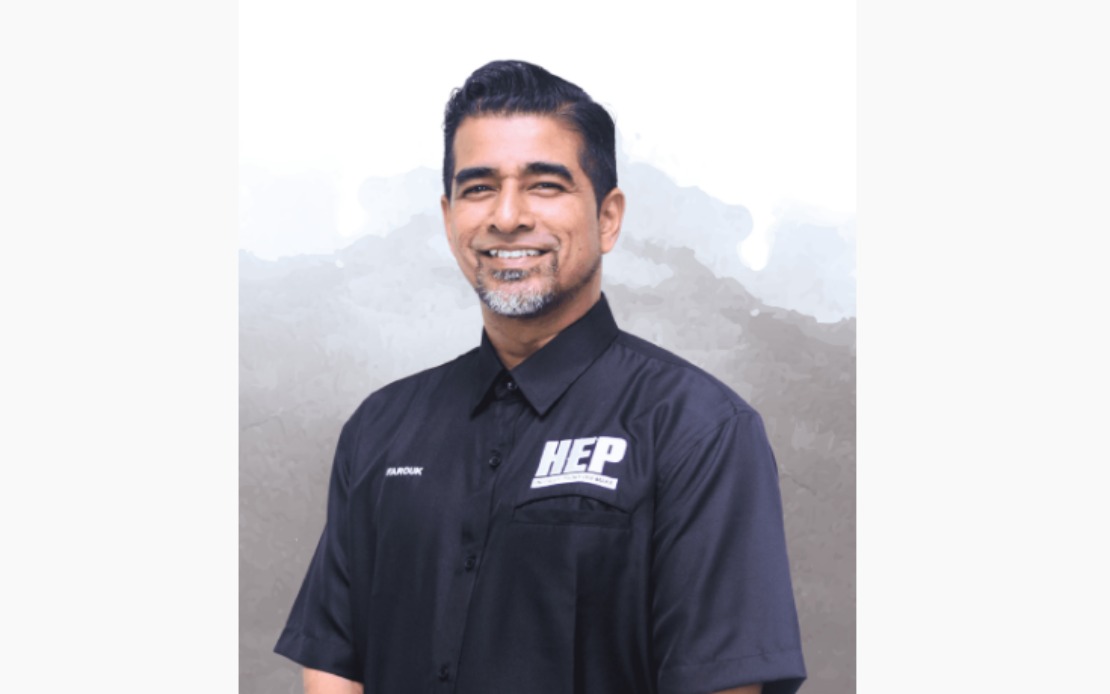
Prospective students from low-income households are being encouraged to embrace higher education opportunities at Universiti Teknologi MARA's Kelantan campus, where university officials stress that financial constraints need not be a barrier to enrollment. Speaking at the UiTM Kelantan Branch Rector's Cakna Programme, Meer Zhar Farouk Amir Razli, the Deputy Rector for Student Affairs, highlighted the misconception that PTPTN loans represent the only pathway for financially vulnerable students seeking university education. Instead, the institution has developed a comprehensive ecosystem of support mechanisms designed to alleviate the burden on families already struggling with economic hardship.
The university's multifaceted assistance framework extends well beyond conventional loan schemes. Zakat assistance programmes, institutional welfare funds, and the innovative Dapur MADANI initiative at residential colleges collectively provide students with tools to manage living expenses throughout their academic journey. The Dapur MADANI programme, in particular, addresses one of the most pressing concerns for low-income students: the day-to-day cost of meals and accommodation during their studies. By embedding this support within the residential college system, the university ensures that financial difficulties do not translate into food insecurity or housing instability—factors that historically have forced talented but poor students to abandon their educational aspirations.
Meer Zhar's intervention carries particular significance given the intensifying competition for places within Malaysia's public higher education sector. As enrollment spaces become increasingly scarce and selection criteria grow more stringent, students who possess admission offers occupy a privileged position. Yet paradoxically, some qualified applicants from disadvantaged backgrounds decline these offers, often operating under outdated assumptions about the true cost of higher education. This phenomenon represents a loss not only for individual students but for Malaysia's broader human capital development, as talented individuals remain trapped in cycles of limited opportunity simply due to incomplete information about available financial pathways.
The institutional approach reflects a growing recognition within Malaysian universities that financial accessibility directly impacts social mobility and national development. UiTM Kelantan's partnership with local non-governmental organisations amplifies the reach and effectiveness of these assistance programmes, creating a support ecosystem that extends beyond what the university alone can provide. The Rector's Cakna Programme itself exemplifies this collaborative model, bringing together multiple stakeholders committed to identifying and supporting newly enrolled students whose circumstances warrant intervention. This targeted approach ensures that assistance reaches those most in need, rather than dispersing resources inefficiently across the broader student population.
The case of Norzarra Dhania Amir Abdullah, a 19-year-old recipient of the programme's laptop assistance, illustrates both the barriers that disadvantaged students face and the transformative potential of targeted institutional support. As the eldest of seven siblings, Norzarra Dhania had previously received an admission offer to UiTM Sarawak but reluctantly declined, unable to reconcile the geographic distance and associated costs with her family's financial reality. Her father's health crisis—triggered by diabetes four years earlier—had fundamentally altered her household's economic trajectory, leaving her mother as the sole breadwinner through restaurant work. In this context, family proximity became not merely a convenience but an economic necessity, allowing her to contribute to household expenses while pursuing her studies.
Norzarra Dhania's situation resonates across rural and semi-urban Malaysia, where distance education creates compound financial burdens that extend far beyond tuition fees. Transportation costs, accommodation expenses, and the loss of potential income when students cannot return home frequently combine to make distant campuses inaccessible for poor families. Her acceptance of the UiTM Kelantan offer, therefore, represents a pragmatic resolution that geography and institutional logistics can indeed facilitate social mobility when aligned appropriately with student circumstances. The psychological dimension of her experience—the preservation of her educational ambitions despite initial rejection—underscores how institutional support mechanisms function not purely as financial instruments but as affirmations that society values her potential.
The provision of a laptop through the Rector's Cakna Programme addresses a critical but often overlooked barrier: digital access. As Malaysian higher education increasingly integrates online learning platforms, virtual collaboration tools, and digital submission systems, students lacking personal computing devices face systematic disadvantage. A laptop represents not merely hardware but the gateway to full participation in contemporary academic life. For someone like Norzarra Dhania, preparing for a Diploma in Management programme beginning in September, possession of her own device eliminates dependence on shared resources and enables her to participate fully in whatever hybrid or digital learning modalities her programme employs.
The emphasis on encouraging students and parents to thoroughly investigate assistance options before rejecting offers reflects a critical gap in information accessibility within Malaysia's education ecosystem. Many low-income families lack the social capital or institutional knowledge to navigate higher education support systems effectively. Universities typically publish assistance information through formal channels that may not reach intended audiences, particularly in rural areas where internet access remains limited and educational institutions operate at greater geographic distance. The Rector's Cakna Programme's grassroots engagement approach directly addresses this information asymmetry, bringing knowledge of assistance to students and families rather than expecting them to independently discover complex bureaucratic systems.
For Malaysian readers, this initiative carries broader implications beyond individual student outcomes. Regional economic competitiveness increasingly depends on workforce skills, innovation capacity, and human capital development. When talented individuals from disadvantaged backgrounds remain outside the tertiary education system due to financial misconceptions rather than genuine inability to pay, the nation squanders valuable intellectual resources. UiTM Kelantan's comprehensive approach—combining financial assistance, proximity accessibility, and targeted outreach—models a replicable framework that other institutions might adopt. Southeast Asian nations grappling with similar challenges of equity in higher education access could adapt these mechanisms to their own contexts.
The case also highlights how institutional innovation can compensate for systemic resource constraints. Malaysia's public universities operate within finite budgets, yet through strategic partnerships with NGOs, creative utilization of residential college spaces through Dapur MADANI, and zakat-based assistance programmes that tap into existing Islamic financial mechanisms, UiTM Kelantan has expanded its support capacity without proportional increases in government funding. This approach demonstrates that equitable access requires institutional creativity and commitment rather than necessarily massive additional expenditure.
Looking forward, the success of initiatives like the Rector's Cakna Programme depends on sustained institutional focus and consistent funding. Stories like Norzarra Dhania's, where a combination of targeted assistance and geographic proximity enables a talented student to pursue her diploma, generate compelling evidence for continued investment in such programmes. As Malaysia's economy faces structural transitions and demands for increasingly sophisticated skill sets, the nation cannot afford to leave capable individuals behind based on poverty alone. Universities like UiTM Kelantan are demonstrating that with deliberate policy choices and institutional commitment, higher education can serve as a genuine vehicle for social mobility rather than a privilege reserved for the economically secure.

%22%2F%3E%3C%2Fpattern%3E%3C%2Fdefs%3E%3Crect%20width%3D%22100%25%22%20height%3D%22100%25%22%20fill%3D%22url(%23ph2hy9vg)%22%2F%3E%3Crect%20width%3D%22100%25%22%20height%3D%22100%25%22%20fill%3D%22url(%23ph2hy9vp)%22%2F%3E%3Ctext%20x%3D%2250%25%22%20y%3D%2250%25%22%20text-anchor%3D%22middle%22%20dominant-baseline%3D%22central%22%20fill%3D%22rgba(255%2C255%2C255%2C0.95)%22%20font-family%3D%22Georgia%2C%20'Times%20New%20Roman'%2C%20serif%22%20font-weight%3D%22700%22%20font-size%3D%22272%22%20letter-spacing%3D%22-0.02em%22%3EAnwar%3C%2Ftext%3E%3C%2Fsvg%3E)