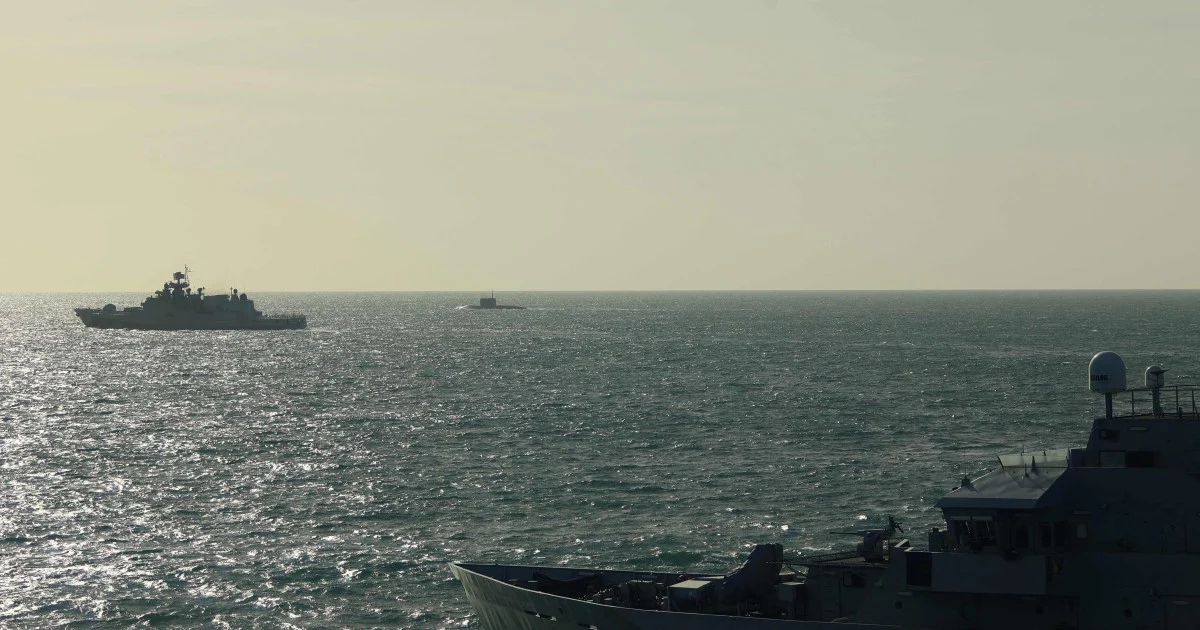
Britain's Prime Minister Keir Starmer has attempted to frame a Russian warship's firing of warning shots near a British yacht in the English Channel as an act of poor judgement rather than deliberate intimidation. The characterisation carries significance for how London is managing its relationship with Moscow during a period of heightened geopolitical friction, suggesting the UK government views the incident as problematic conduct deserving criticism without interpreting it as part of a broader strategic campaign of coercion.
The distinction Starmer drew between reckless and sinister conduct reflects a careful calibration of Britain's diplomatic messaging. By labelling the incident reckless, the Prime Minister acknowledged that the Russian vessel's actions were inappropriate and dangerous, creating legitimate safety concerns for maritime traffic and civilian vessels operating in international waters. Such language demands accountability and signals British disapproval of the conduct to both domestic audiences and international observers. However, by rejecting the characterisation of the actions as sinister, Starmer appeared to resist framing the incident as evidence of a coordinated Russian strategy to assert dominance or deliberately escalate tensions in European waters.
The English Channel remains one of the world's busiest shipping corridors, with thousands of vessels transiting daily between the North Sea and the Atlantic. Any incident involving warning fire in this congested waterway raises immediate concerns about maritime safety and the risks posed to commercial shipping, fishing vessels, and private boats. The incident thus carries practical implications for the safety protocols governing one of Europe's most strategically important maritime routes, a concern that reverberates throughout regional shipping industries and underscores the potential costs of deteriorating naval relations.
Maritime tensions between Russia and Western powers have become increasingly common since Moscow's invasion of Ukraine in February 2022. The incident near the yacht represents the latest in a series of at-sea confrontations involving Russian military vessels and British or NATO-affiliated ships operating in European waters. These recurring incidents suggest an established pattern of behaviour rather than isolated events, though official characterisations of intent vary significantly depending on political context and diplomatic calculation.
Starmer's measured language must be understood within the broader context of Britain's relationship with Russia. The UK has been a vocal critic of Russian military actions and remains a strong supporter of Ukraine, yet London simultaneously manages complex international relationships and maintains channels of communication with Moscow. The Prime Minister's distinction between recklessness and strategic intent may reflect an effort to lodge a formal protest against the warship's actions without escalating rhetoric to levels that would make diplomatic resolution or de-escalation more difficult.
For Southeast Asian observers and policymakers, the incident illustrates broader patterns in how major powers conduct maritime operations in regions where their interests intersect. Malaysia and other nations in the region maintain shipping lanes and fishing grounds that occasionally intersect with the interests of larger military powers, making the question of how such confrontations are managed and communicated potentially relevant to regional stability. The distinction between accidental provocation and deliberate strategic messaging shapes how incidents escalate or are contained.
The incident also highlights the vulnerability of civilian maritime activity to military tensions. A yacht operating in the English Channel would have had no military or strategic significance, yet became caught in a confrontation between Russian and British interests. Similarly, commercial vessels, fishing boats, and private craft throughout contested or militarily sensitive waters face potential risks when great power tensions manifest at sea. The question of how warning shots or other aggressive naval conduct affects civilian mariners remains a persistent concern in multiple regions globally.
Russia's maritime activities in European waters have generated repeated concerns from NATO members and Britain, particularly as Moscow seeks to project power and signal its continued relevance in regions where it faces Western military and political opposition. The warning shots incident must be situated within Russia's broader pattern of assertive naval operations, including submarine activity, surveillance missions, and exercises that Western governments view as deliberately provocative. However, Russia frames such activities as routine exercises and legitimate assertions of its right to operate in international waters.
Starmer's comments represent an attempt to respond to the incident with appropriate firmness while avoiding rhetoric that would further harden positions or create momentum toward escalation. The Prime Minister's measured approach suggests that while Britain takes the incident seriously and views the conduct as unacceptable, the government does not interpret the episode as evidence of imminent military escalation or as part of a coordinated Russian campaign specifically targeting British interests. This nuance in official messaging carries consequences for how both nations position themselves and how the international community interprets the significance of such confrontations.
The incident underscores how maritime zones remain spaces of potential friction in the contemporary geopolitical environment, where military capabilities, civilian activity, and political tensions intersect without clear demarcation. As Russia and Western powers compete for influence and prestige, maritime spaces become venues for demonstrating resolve, asserting rights, and occasionally miscalculating intentions. The challenge for nations like Britain lies in responding firmly to dangerous conduct while maintaining sufficient diplomatic flexibility to prevent isolated incidents from metastasizing into broader conflicts. Starmer's distinction between recklessness and sinister intent reflects this delicate balance.


%22%2F%3E%3C%2Fpattern%3E%3C%2Fdefs%3E%3Crect%20width%3D%22100%25%22%20height%3D%22100%25%22%20fill%3D%22url(%23ph2hy9vg)%22%2F%3E%3Crect%20width%3D%22100%25%22%20height%3D%22100%25%22%20fill%3D%22url(%23ph2hy9vp)%22%2F%3E%3Ctext%20x%3D%2250%25%22%20y%3D%2250%25%22%20text-anchor%3D%22middle%22%20dominant-baseline%3D%22central%22%20fill%3D%22rgba(255%2C255%2C255%2C0.95)%22%20font-family%3D%22Georgia%2C%20'Times%20New%20Roman'%2C%20serif%22%20font-weight%3D%22700%22%20font-size%3D%22272%22%20letter-spacing%3D%22-0.02em%22%3EAnwar%3C%2Ftext%3E%3C%2Fsvg%3E)