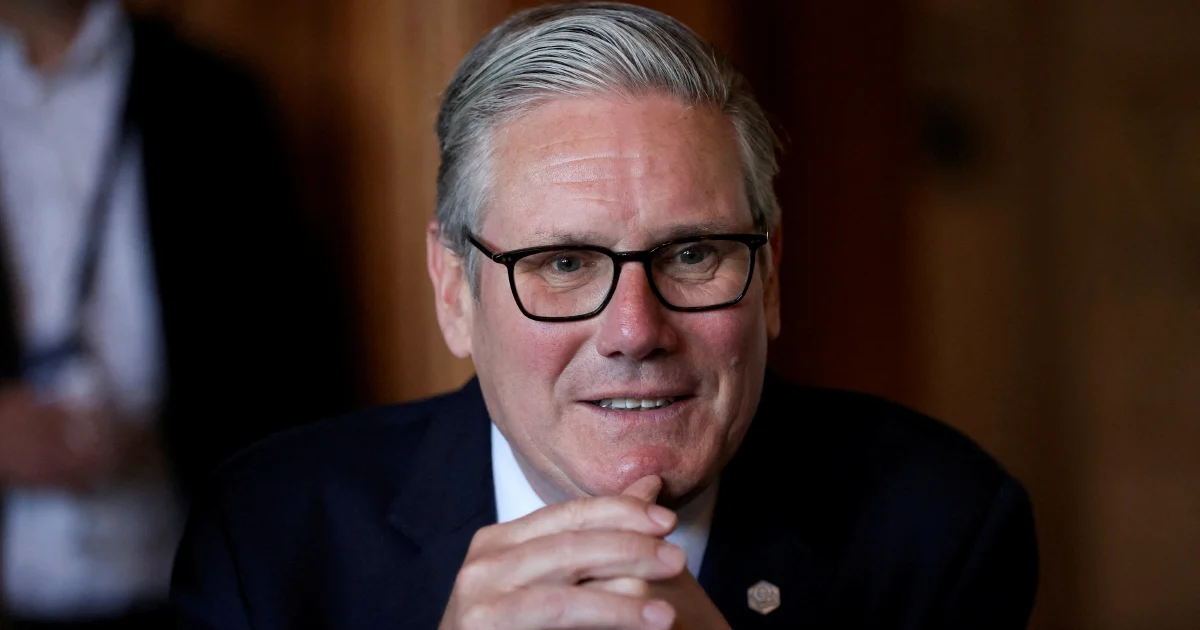
Prime Minister Keir Starmer has moved to quash mounting speculation about his imminent resignation, with his office flatly denying claims published in The Observer that he planned to announce his departure and outline a succession timeline. The denial came as the British newspaper suggested the Labour leader was poised to make a dramatic announcement on Monday, triggering fresh uncertainty about the stability of his government just months into his term.
The apparent contradiction between media reporting and official messaging underscores the precarious political climate facing Starmer's administration. The Observer's report, if accurate, would have represented a shocking capitulation by a prime minister who came to power on a mandate to restore stability to British politics after years of Conservative government turmoil. Instead, officials close to Starmer characterised him as deeply committed to his responsibilities, with no intention of departing his post in the foreseeable future.
This clash between Westminster rumour and official denial reveals the vulnerability of Starmer's position. Even as his office insists he remains laser-focused on governance, the very fact that a reputable publication would publish such claims suggests underlying anxieties within Labour ranks or among Westminster observers about the government's trajectory. The willingness of sources to leak resignation speculation to journalists signals potential fractures within the party or broader dissatisfaction with the administration's performance thus far.
For Malaysian observers and Southeast Asian political analysts, the Starmer situation offers instructive parallels about how modern democracies handle leadership crises and the mechanics of media-driven political pressure. Unlike some Asian contexts where prime ministerial transitions can occur behind closed doors or through explicit party machinery, the British system allows speculation to percolate through the press as a form of de facto political pressure, testing whether a leader commands sufficient support to weather public doubt.
The timing of the Observer's report carries significant weight. Starmer assumed office following years of Conservative Party dysfunction, including the chaotic tenures of Boris Johnson and Liz Truss, which had left public confidence in British governance deeply depleted. Labour's victory represented a desire for competence and continuity. Any genuine indication that Starmer was contemplating departure would shatter that mandate almost immediately, rendering his government a caretaker administration rather than a transformative force.
Government sources insisting that Starmer remains focused on his job constitute the standard response to such rumours in Westminster politics. Whether this represents genuine confidence or damage control remains unclear. The intensity of recent speculation, however, suggests that something beneath the surface has prompted observers and party insiders to question Starmer's longevity. Such doubts rarely materialise from thin air; they typically reflect genuine tensions, policy setbacks, or internal party dissatisfaction.
The episode also illustrates how digital media and instant communication have transformed political crisis management. In previous eras, resignation speculation would have been confined to Westminster gossip circles or private party meetings. Today, a major newspaper's claim reaches millions instantly, forcing rapid official response and potentially triggering fresh waves of reporting as other outlets pursue the story. This creates a feedback loop whereby initial speculation generates official denials, which then become news in themselves, amplifying rather than containing the controversy.
For British business and international observers, including those in Southeast Asia with economic ties to the United Kingdom, such political instability carries real implications. Investor confidence depends partly on predictable governance and clear leadership. Even if Starmer survives this particular round of resignation rumours, the mere fact that such scenarios circulate so publicly can influence decision-making by multinational corporations and sovereign wealth funds considering commitments to Britain.
The Labour government's credibility also affects Britain's diplomatic positioning globally. The UK seeks to maintain influence on the international stage through soft power and strategic partnerships. A prime minister engulfed in constant questions about his longevity projects weakness rather than the assured leadership that Starmer promised when campaigning. This matters particularly for Britain's engagement with Indo-Pacific democracies and its role in regional security architecture, where consistency and clear messaging carry weight.
Looking forward, Starmer's ability to move beyond these resignation rumours will depend heavily on demonstrating tangible policy achievements and maintaining party unity. The Labour government must show that it possesses the coherence and direction that the Conservatives visibly lacked. Every future setback risks reigniting speculation about leadership continuity, making Starmer's first months in office genuinely consequential in establishing whether his administration can transcend the instability that has characterised recent British politics. For now, his office's emphatic denial of resignation plans represents the necessary opening gambit in a longer struggle to establish his authority.