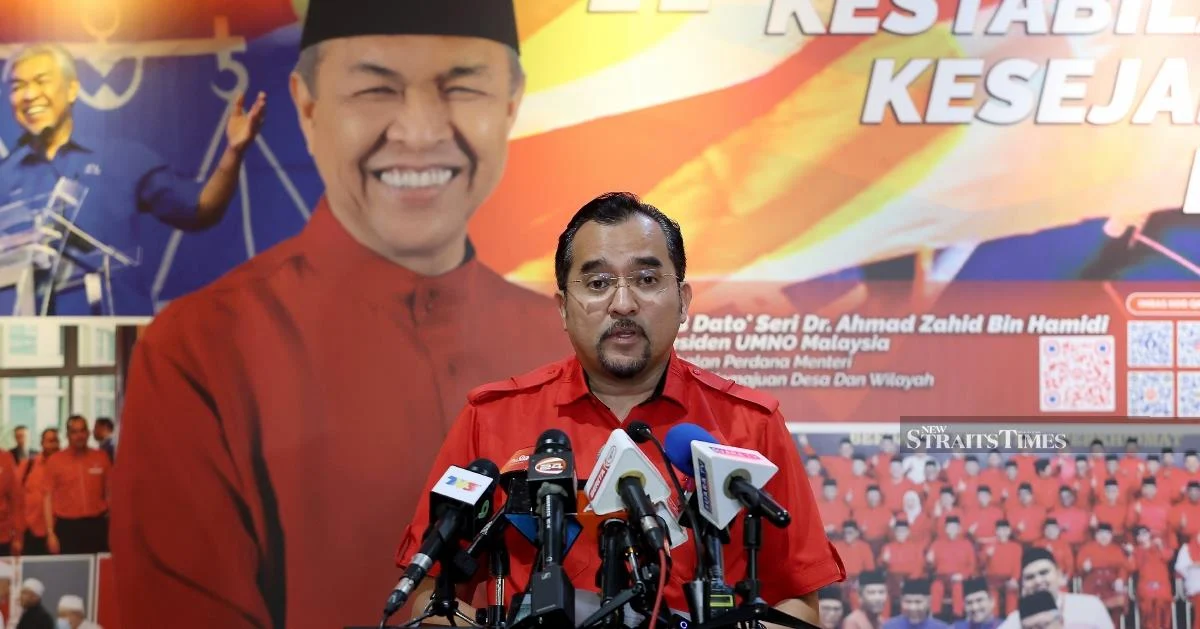
Umno will pursue a substantive campaign strategy centred on concrete policy proposals rather than personal attacks during the upcoming state elections in Johor and Negri Sembilan, according to party secretary-general Datuk Dr Asyraf Wajdi Dusuki. The commitment signals an attempt by Malaysia's historically dominant coalition partner to reshape its electoral approach and present a more serious governing agenda to voters in two states considered critical to Umno's political fortunes.
The party's decision to emphasise constructive messaging reflects broader recognition within Umno's leadership that Malaysian voters have grown increasingly fatigued by acrimonious political contests characterised by character assassination and inflammatory rhetoric. By repositioning itself as a solution-oriented party, Umno appears intent on reclaiming political credibility after a series of setbacks that have weakened its standing in state and national politics over recent years. This strategic recalibration suggests party strategists believe substantive engagement with policy issues will resonate more effectively with an electorate seeking tangible improvements in their living standards and economic prospects.
Johor and Negri Sembilan represent significant battlegrounds within Malaysia's political landscape. Johor, historically a Umno stronghold, has experienced shifting electoral dynamics in recent years, making retention of state control a priority for the party. Negri Sembilan, meanwhile, remains an important swing state where coalition performance can materially affect broader national political calculations. The outcomes of both contests will provide important indicators regarding Umno's electoral recovery and capacity to mobilise support around its policy platform rather than relying on traditional partisan divisions.
Umno's emphasis on policy-driven campaigns carries particular significance for Southeast Asian observers tracking Malaysia's democratic development. The region has witnessed increasing concerns about deteriorating standards of political discourse, with personal attacks and misinformation becoming more prevalent across several countries' electoral processes. By contrast, Umno's stated commitment to avoiding mudslinging demonstrates awareness among Malaysian political actors that elevated political standards ultimately benefit democratic institutions and public confidence in electoral legitimacy.
The secretary-general's pronouncement also reflects internal party dynamics. Umno has traditionally competed within Malaysia's ruling Barisan Nasional coalition and has frequently dominated state government formations. However, the party's electoral performance has become less predictable following the 2018 general election upheaval and subsequent political realignments. Demonstrating discipline and coherence around policy messaging could help Umno project unity and competence to wavering supporters who have questioned party direction and leadership effectiveness.
For Malaysian voters in these two states, Umno's campaign approach offers an opportunity to evaluate the party's actual governing proposals and vision for economic development, education, healthcare, and local infrastructure improvements. Rather than being subjected primarily to attacks on opposition figures and parties, electorates can assess which political formations genuinely address their concerns regarding rising cost of living, employment opportunities, and public service quality. This represents a more constructive foundation for informed electoral choice.
The broader implications of Umno's stance merit consideration within Malaysia's political economy. State elections determine governance of important economic regions and influence investment decisions by both domestic and international business interests. Campaigns focused on substantive policy differentiation encourage serious policy debate and hold political parties accountable for fulfilling stated commitments after elections conclude. This dynamic strengthens governance outcomes and reduces volatility associated with personality-driven or emotion-based political contestation.
Neighbouring Southeast Asian nations monitoring Malaysian politics will note this apparent commitment to campaign standards. Regional democracy observers frequently highlight the importance of electoral institutions functioning with integrity and public participation remaining grounded in substantive policy disagreement rather than sectarian or personalised conflict. Umno's stated intention aligns with these democratic principles, though implementation will ultimately determine whether the commitment translates into actual campaign conduct.
The timing of this statement suggests Umno anticipated questions regarding campaign conduct and sought to establish ethical parameters in advance of the electoral period. This proactive approach differs from reactive positioning that sometimes characterises Malaysian political campaigns. By framing its campaign strategy around policy contributions, Umno has implicitly invited opposition parties to adopt similar standards, creating normative pressure toward more constructive political engagement across the entire electoral contest.
Ultimately, voter assessment of Umno's campaign execution will depend on whether the party's actual campaign communications align with its stated commitment to substantive policy focus. Malaysian electorates have become sophisticated in evaluating whether political parties honour their pre-election pronouncements regarding campaign standards and conduct. The Johor and Negri Sembilan elections will provide concrete evidence of whether Umno's policy-centred approach genuinely shapes campaign dynamics or remains rhetorical positioning lacking substantive implementation.

%22%2F%3E%3C%2Fpattern%3E%3C%2Fdefs%3E%3Crect%20width%3D%22100%25%22%20height%3D%22100%25%22%20fill%3D%22url(%23ph2hy9vg)%22%2F%3E%3Crect%20width%3D%22100%25%22%20height%3D%22100%25%22%20fill%3D%22url(%23ph2hy9vp)%22%2F%3E%3Ctext%20x%3D%2250%25%22%20y%3D%2250%25%22%20text-anchor%3D%22middle%22%20dominant-baseline%3D%22central%22%20fill%3D%22rgba(255%2C255%2C255%2C0.95)%22%20font-family%3D%22Georgia%2C%20'Times%20New%20Roman'%2C%20serif%22%20font-weight%3D%22700%22%20font-size%3D%22272%22%20letter-spacing%3D%22-0.02em%22%3EAnwar%3C%2Ftext%3E%3C%2Fsvg%3E)