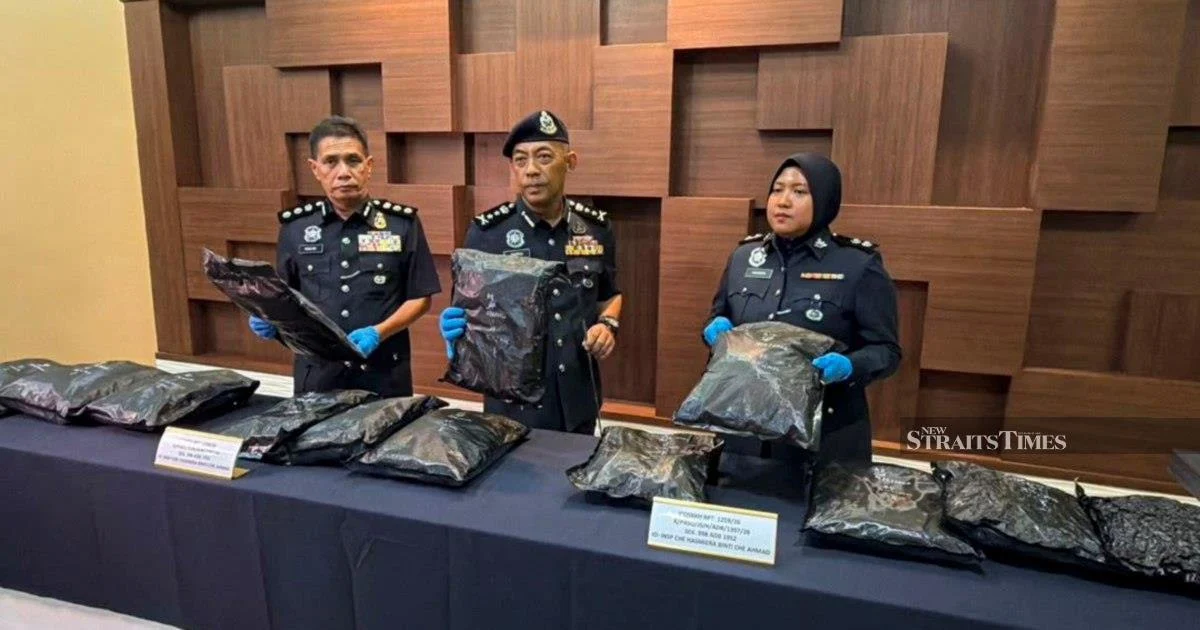
A student enrolled at a private institution of higher learning was apprehended at the Bukit Kayu Hitam border checkpoint on Monday in connection with an attempted cannabis smuggling operation. The seizure, which involved 14.63 kilograms of cannabis buds with an estimated street value of RM1.17 million, marks another significant narcotics interception along Malaysia's northern border region. The arrest underscores the persistent vulnerability of international entry points despite enhanced vigilance by customs and drug enforcement personnel.
According to officials in Alor Star, the suspect was intercepted while attempting to transport the controlled substance across the Thai-Malaysian frontier. The buds, packaged for distribution, were discovered during routine inspections of vehicles crossing into Malaysian territory. The quantity seized suggests an operation designed to supply domestic markets rather than a personal consumption cache, indicating the student may have been part of an organised supply network operating across the region.
Bukit Kayu Hitam represents one of the busiest terrestrial crossing points in the country, handling thousands of vehicles daily from Thailand. This geographical position makes the checkpoint both strategically important for border security and an attractive target for smugglers seeking to exploit gaps in inspection procedures. The interception demonstrates that authorities maintain significant operational capacity, yet the continued flow of narcotics through such channels reveals the sophisticated methods employed by trafficking organisations.
The involvement of a university student in the alleged smuggling operation raises concerns about the recruitment patterns of drug trafficking networks within Malaysia's educational institutions. Universities and colleges have historically been identified as recruitment grounds where economic pressures on students create vulnerability to lucrative smuggling opportunities. The case suggests that traffickers may be deliberately targeting students with limited financial resources who can be incentivised through substantial payments for relatively short-term courier assignments.
Cannabis interdiction remains a priority for the Royal Malaysia Police and the Malaysian Maritime Enforcement Agency given the drug's escalating availability in Southeast Asia. Thailand's recent reclassification of cannabis for medical purposes has inadvertently created a grey zone that smugglers exploit to justify cross-border movements. While the policy was designed to regulate pharmaceutical and research uses, the distinction between licit and illicit supply chains remains difficult to enforce at practical border checkpoints.
The street value assigned to this seizure reflects the significant profit margins available in the domestic narcotics market. Cannabis cultivation and trafficking have expanded considerably throughout Southeast Asia as demand rises among younger urban populations. Malaysia's established criminal penalties for drug possession and trafficking have not deterred supply networks, which adapt continuously by employing individuals with lower profiles, such as students, who present less obvious red flags to inspectors.
Investigators will likely examine whether this student was part of a broader operational structure with established supply routes and distribution networks. The sophistication of the packaging and the substantial quantity suggest coordination with larger trafficking entities. Intelligence gathered from this arrest could potentially identify suppliers operating on the Thai side of the border and buyers within Malaysia's urban centres.
The geographical context of Bukit Kayu Hitam, located in Kedah bordering Sungai Petani region, places the checkpoint within an area already designated as a trafficking hotspot by regional enforcement agencies. The proximity to Penang, a major economic hub with significant commercial port facilities, makes the area strategically valuable for smugglers seeking to move goods through Malaysia toward regional markets including Singapore and beyond. Previous enforcement operations in the vicinity have repeatedly identified cannabis as a primary smuggled commodity alongside methamphetamine and fentanyl analogues.
For Malaysian university students, the incident serves as a cautionary tale regarding the consequences of involvement with transnational drug trafficking. Convicted smugglers face mandatory minimum sentences of 6 years imprisonment for quantities exceeding 5 kilograms without trafficking intent, with significantly harsher penalties if trafficking is established. The conviction also results in automatic disqualification from employment in numerous professional sectors, effectively ending career prospects across government, finance, and regulated industries.
The arrest also reflects ongoing challenges faced by Malaysian customs and law enforcement agencies in managing the volume of cross-border traffic while maintaining detection capabilities for concealed narcotics. Modern smuggling techniques have become increasingly sophisticated, with drugs concealed in vehicle fuel tanks, compartments within structural components, and sophisticated compartments designed to evade detection technology. That this particular shipment was identified suggests effective deployment of inspection resources, though the volume of daily traffic means numerous consignments likely pass undetected.
Regional cooperation mechanisms, including information sharing between Thailand, Malaysia, and other ASEAN nations, have expanded in recent years to address narcotics trafficking. However, disparities in enforcement priorities and penalties across borders create operational challenges. Thailand's evolving cannabis regulations, combined with Malaysia's strict prohibition framework, create a complex legal environment that smugglers actively exploit through recruitment of couriers like the arrested student.
The case underscores the necessity for intensified community awareness campaigns targeting educational institutions about the risks of involvement in drug smuggling, regardless of financial incentives offered. Universities have a responsibility to educate students about the severe legal and personal consequences of such involvement. Simultaneously, authorities must continue adapting interdiction strategies to address emerging trafficking patterns and the evolving sophistication of organised criminal networks operating throughout the region.


%22%2F%3E%3C%2Fpattern%3E%3C%2Fdefs%3E%3Crect%20width%3D%22100%25%22%20height%3D%22100%25%22%20fill%3D%22url(%23ph2hy9vg)%22%2F%3E%3Crect%20width%3D%22100%25%22%20height%3D%22100%25%22%20fill%3D%22url(%23ph2hy9vp)%22%2F%3E%3Ctext%20x%3D%2250%25%22%20y%3D%2250%25%22%20text-anchor%3D%22middle%22%20dominant-baseline%3D%22central%22%20fill%3D%22rgba(255%2C255%2C255%2C0.95)%22%20font-family%3D%22Georgia%2C%20'Times%20New%20Roman'%2C%20serif%22%20font-weight%3D%22700%22%20font-size%3D%22272%22%20letter-spacing%3D%22-0.02em%22%3EAnwar%3C%2Ftext%3E%3C%2Fsvg%3E)