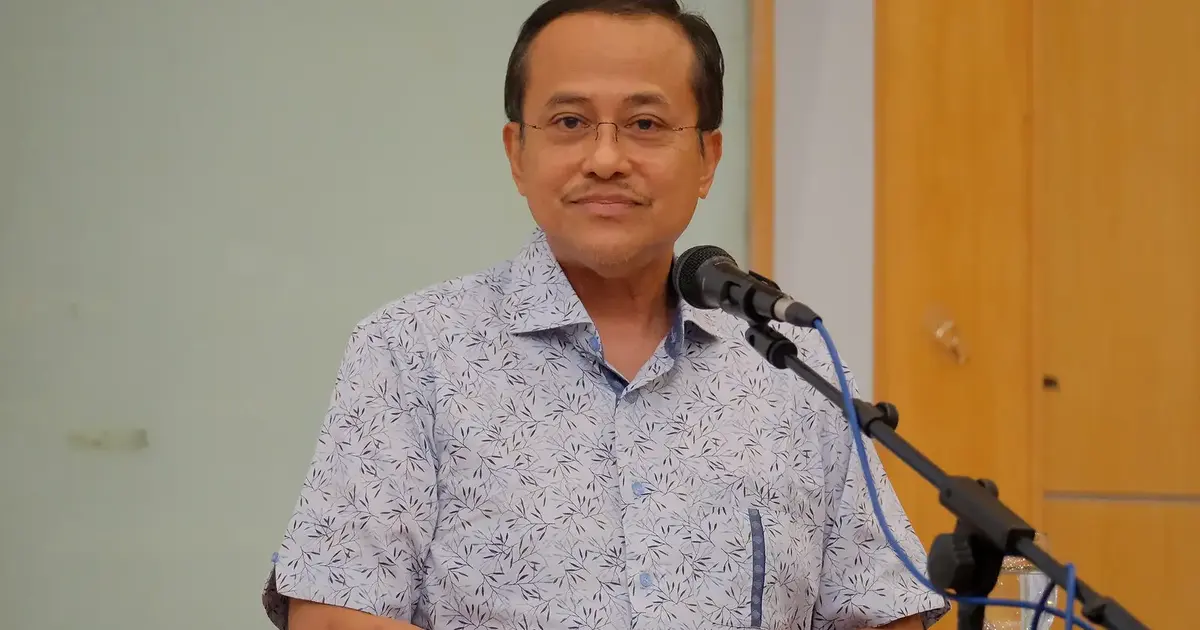
Political sentiment in Malaysia has undergone a notable shift, with ordinary voters increasingly gravitating towards leaders who project composure and stability rather than those inclined towards fiery oratory and sweeping campaign pledges. According to Shahril Hamdan, a former information chief of Umno, this recalibration of public preference reflects a broader fatigue with the confrontational political style that has dominated national discourse in recent years.
The observation carries particular relevance in Malaysia's contemporary political landscape, where electoral contests have traditionally been characterized by intense rhetoric, polarizing messaging, and ambitious promises that frequently fail to materialize upon taking office. Shahril's assessment suggests that this formula, which once energized voters and drove turnout, has lost much of its resonance with an electorate that appears increasingly discerning about distinguishing between political theatre and substantive governance capability.
This preference for restraint and measured leadership reflects what analysts describe as voter maturity and growing disillusionment with traditional campaign tactics. After decades of witnessing policy announcements that fall short of implementation, and experiencing the consequences of leadership based on emotional rather than rational appeals, the Malaysian electorate appears to be recalibrating its expectations. Voters now seem more inclined to evaluate candidates based on their capacity to deliver concrete results within realistic timeframes rather than their ability to generate excitement through rhetoric alone.
The emergence of leaders embodying this calmer approach, such as Samsuri—identified by Shahril as representative of this new political archetype—suggests that there exists substantial electoral appetite for a different leadership style altogether. These figures typically prioritize substance over spectacle, demonstrating competence through administrative action rather than dramatic pronouncements. This shift has profound implications for how political parties structure their recruitment of candidates and develop their messaging strategies moving forward.
For major political organizations like Umno, this transformation poses both challenges and opportunities. Historically reliant on commanding personalities who could command attention and mobilize bases through forceful rhetoric, the party must now consider whether its organizational culture and leadership development mechanisms are adequately preparing cadres for an electorate with fundamentally different expectations. The question becomes whether established parties can successfully transition their political machinery to emphasize the administrative and organizational competencies that appeal to today's voters.
Regional considerations also come into play. Within Southeast Asia's broader political context, Malaysia's movement towards preferring steady, competent leadership aligns with trends observable in other mature democracies where voters have grown increasingly pragmatic and performance-focused. Singapore's long-standing emphasis on meritocratic governance, Indonesia's cautious embrace of effective administration, and Thailand's periodic searches for capable stewardship all suggest that this Malaysian shift reflects deeper regional patterns rather than isolated local sentiment.
The implications extend to how political campaigns themselves are conducted. Rather than relying on mass rallies featuring emotional appeals and promises of revolutionary change, campaigns increasingly benefit from detailed policy presentations, transparent communication about implementation timelines, and evidence of past administrative success. This demands greater sophistication from political communicators and a fundamental rethinking of campaign budgets and resource allocation.
Shahril's analysis also illuminates the generational dimension often overlooked in Malaysian political commentary. Younger voters who have limited personal memory of previous political eras may be less susceptible to traditional appeals that resonate with older cohorts. Having grown up with social media, instant information access, and expectations of accountability, this demographic naturally gravitates towards leaders who demonstrate clarity, consistency, and verifiable competence rather than those relying on charisma or inflammatory rhetoric.
The shift carries consequences for civil discourse as well. When voters prioritize calm, measured leadership, the entire political ecosystem experiences pressure to moderate its rhetoric and focus on substantive policy debate. This can reduce polarization and enable more productive parliamentary discourse, though it may also reduce the entertainment value that has made Malaysian politics engaging for casual observers accustomed to high-stakes drama.
Moreover, this transformation suggests that Malaysian democracy may be entering a more mature phase where electoral competition emphasizes technocratic competence alongside ideological positioning. Parties must now demonstrate not merely that their vision for Malaysia differs fundamentally from opponents, but that they possess the organizational capability and leadership talent to execute their vision effectively. This represents a significant evolution in how Malaysian voters evaluate candidates and parties.
For governance institutions themselves, the shift towards preferring calm, competent leadership creates pressure for improved performance and visible results. Citizens who have abandoned their taste for grand rhetoric now scrutinize actual policy outcomes, administrative efficiency, and service delivery. This accountability mechanism, while demanding for those in power, potentially strengthens institutional performance across government.


%22%2F%3E%3C%2Fpattern%3E%3C%2Fdefs%3E%3Crect%20width%3D%22100%25%22%20height%3D%22100%25%22%20fill%3D%22url(%23ph2hy9vg)%22%2F%3E%3Crect%20width%3D%22100%25%22%20height%3D%22100%25%22%20fill%3D%22url(%23ph2hy9vp)%22%2F%3E%3Ctext%20x%3D%2250%25%22%20y%3D%2250%25%22%20text-anchor%3D%22middle%22%20dominant-baseline%3D%22central%22%20fill%3D%22rgba(255%2C255%2C255%2C0.95)%22%20font-family%3D%22Georgia%2C%20'Times%20New%20Roman'%2C%20serif%22%20font-weight%3D%22700%22%20font-size%3D%22272%22%20letter-spacing%3D%22-0.02em%22%3EAnwar%3C%2Ftext%3E%3C%2Fsvg%3E)