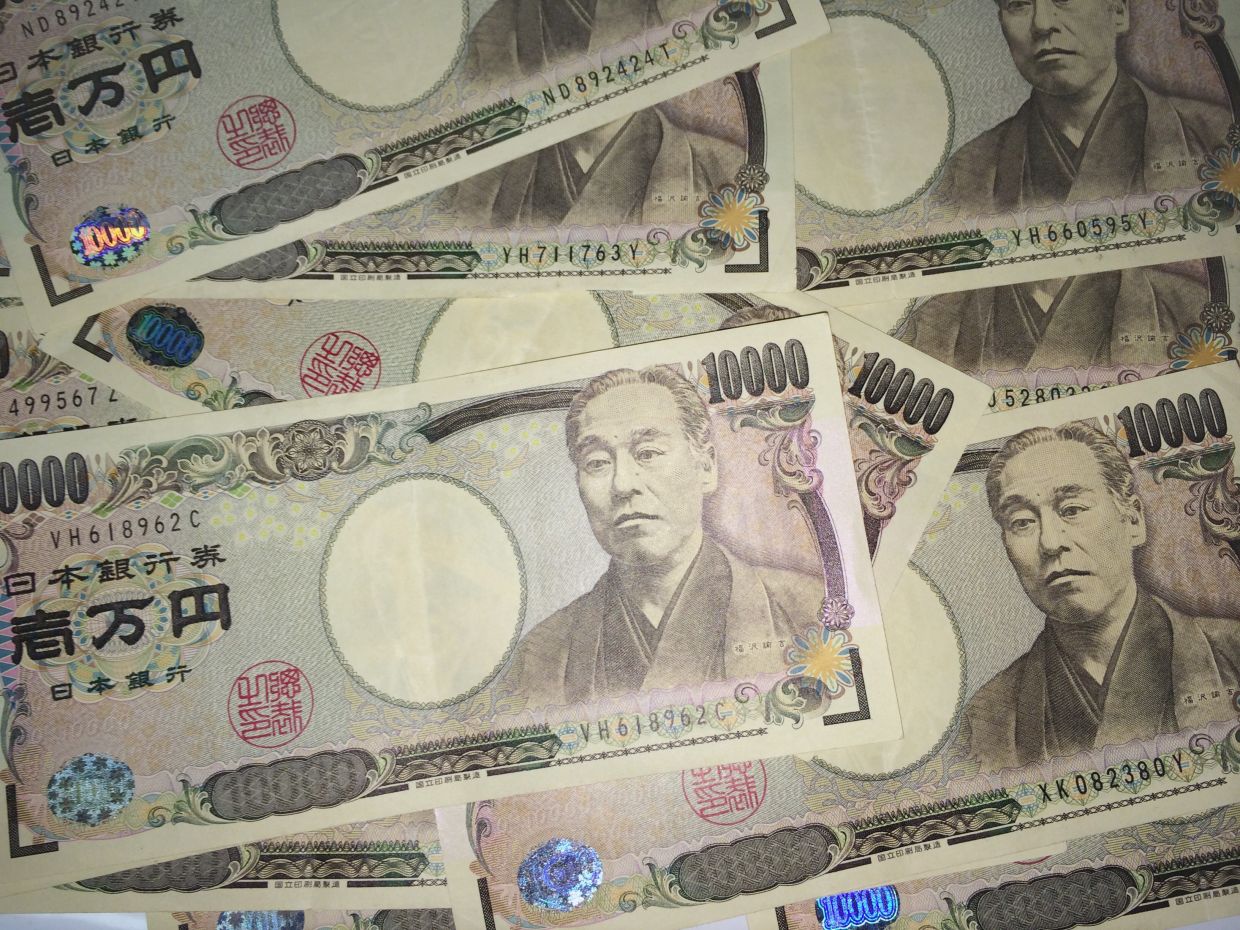
Japan's currency has slumped to levels unseen in nearly four decades, revealing the limitations of orthodox monetary policy responses in an environment characterised by persistent structural headwinds and shifting investor sentiment. Trading at 161.205 yen per dollar on Friday—marginally firmer than the previous session's two-year lows—the yen remains under severe pressure despite twin attempts by Japanese authorities to arrest its decline through rate normalisation and direct market intervention. The pullback from the weakest levels offers little comfort, given that neither a major geopolitical de-escalation nor substantial policy tightening has managed to establish genuine buying momentum for Japan's chronically embattled currency.
The resilience of the dollar and the corresponding fragility of the yen reflect a complex interplay of factors that extend far beyond traditional interest rate differentials. While thin liquidity conditions across Asian and American markets on Friday constrained price discovery, the underlying dynamics driving the currency rout remain structurally intact. Investors have grown increasingly sceptical about the Bank of Japan's ability or willingness to maintain a credible tightening cycle, especially given the political economy challenges surrounding fiscal austerity in an ageing society. This scepticism has been exacerbated by recent concerns about the spending ambitions outlined by Prime Minister Sanae Takaichi, which markets interpret as potentially inflationary and fiscally loose—the antithesis of what would typically support a strengthening currency.
The Ministry of Finance's earlier intervention efforts and the Bank of Japan's decision to raise interest rates to a 31-year high just last week have proven inadequate in reversing the yen's downward trajectory. According to market analysts at IG in Sydney, Japanese authorities are likely to mount a defence around the 161.95 yen level, deploying approximately ¥11.7 trillion in resources—comparable to the scale of intervention witnessed in April and May. However, such a response would consume roughly 11 to 12 percent of Japan's total foreign exchange reserves in a compressed timeframe, creating a strategic bind. Once such substantial firepower has been expended with limited visible effect, authorities face a painful choice between escalating intervention at the risk of depleting reserves and undermining credibility, or strategically withdrawing to preserve flexibility for future crises.
The inflation data released on Friday underscores a central tension in Japan's macroeconomic picture. Core inflation remained below the Bank of Japan's 2 percent target for a fourth consecutive month in May, a result heavily influenced by government fuel price subsidies that have masked underlying cost pressures. This disjuncture between headline and underlying inflation dynamics creates substantial policy uncertainty. Capital Economics analysts project that as government price supports eventually expire and higher energy costs feed through into utility charges and broader goods and services, inflation could accelerate sharply to approximately 3.5 percent by early 2027. Such an outcome would vindicate those policymakers who have argued for more aggressive rate increases, but the timing and magnitude remain deeply uncertain.
Minutes from the Bank of Japan's April policy meeting, released alongside Friday's data, reveal that some board members have advocated for faster rate increases should geopolitical tensions in the Middle East persist. This hawkish contingent fears that underlying inflation could overshoot the central bank's 2 percent target without more decisive action. Bank of Japan Deputy Governor Ryozo Himino reiterated on Friday that the institution remains committed to gradual rate increases, carefully calibrated to guard against precisely such an overshoot scenario. The challenge facing the central bank is that tighter financial conditions risk undermining consumer spending and corporate investment, potentially slowing an already fragile economic recovery. The messaging from Himino and his colleagues suggests an institution determined to move cautiously, cognisant of the risks that aggressive tightening poses to an economy still adjusting to structural headwinds including population decline and demographic challenges.
Beyond Japan's currency troubles, global foreign exchange markets displayed notable stability despite ongoing geopolitical uncertainty. The signing of a U.S.-Iran peace accord earlier in the week prompted a partial normalisation of shipping patterns through the Strait of Hormuz, easing concerns about potential energy supply disruptions. This development allowed most other currency pairs to trade within narrow ranges, with the U.S. dollar index holding steady at 100.81 after climbing to a one-year peak of 100.5 percent on Thursday. The relative stability across currency markets suggests that while participants remain cautious about the durability of Middle Eastern geopolitical détente, the immediate panic around energy security and supply chain disruption has dissipated for now.
The British pound remained essentially flat at $1.3205 after the Bank of England's decision to hold rates at 3.75 percent on Thursday, signalling a cautious stance amid lingering uncertainties about the sustainability of recent inflation moderations. Traders are closely monitoring the outcome of a Greater Manchester by-election featuring incumbent Mayor Andy Burnham, viewing the electoral contest as a potential harbinger of internal Labour Party dynamics. Should Burnham secure victory in his new seat, analysts suggest he could emerge as a challenger to Prime Minister Keir Starmer for party leadership, potentially signalling deeper fractures within the governing coalition. Such political turbulence could complicate economic policymaking and add another layer of uncertainty to sterling's trajectory.
Australian dollar weakness, with the currency dipping 0.1 percent to $0.7011, reflects ongoing sensitivity to shifts in risk appetite and commodity price dynamics. The New Zealand dollar held steady at $0.5756, as traders balanced expectations for Reserve Bank policy adjustments against broader regional economic conditions. These antipodean currencies remain particularly vulnerable to the divergent trajectories of Asian growth and global monetary policy, with any substantive tightening by Japan or the Federal Reserve capable of triggering sharp repricing across emerging market assets. The relative stability observed on Friday masks underlying fragility that could crystallise rapidly should geopolitical tensions resurface or economic data disappoint more broadly.
Cryptocurrency markets showed modest weakness, with bitcoin declining 0.2 percent to $62,868.18 and ether trading flat at $1,708.98. The resilience of digital assets despite the broader currency turmoil suggests that investors continue to view cryptocurrencies as somewhat orthogonal to traditional macroeconomic dynamics. However, for Malaysian and Southeast Asian readers monitoring their own regional currency exposures, the Japanese yen's travails carry important cautionary implications. The episode demonstrates that even substantial policy interventions and rate increases cannot reliably reverse currency movements when underlying structural and sentiment factors prove sufficiently powerful. Regional policymakers contemplating their own currency defence strategies must grapple with the reality that intervention reserves, while substantial, are ultimately finite resources that require judicious deployment.


%22%2F%3E%3C%2Fpattern%3E%3C%2Fdefs%3E%3Crect%20width%3D%22100%25%22%20height%3D%22100%25%22%20fill%3D%22url(%23ph2hy9vg)%22%2F%3E%3Crect%20width%3D%22100%25%22%20height%3D%22100%25%22%20fill%3D%22url(%23ph2hy9vp)%22%2F%3E%3Ctext%20x%3D%2250%25%22%20y%3D%2250%25%22%20text-anchor%3D%22middle%22%20dominant-baseline%3D%22central%22%20fill%3D%22rgba(255%2C255%2C255%2C0.95)%22%20font-family%3D%22Georgia%2C%20'Times%20New%20Roman'%2C%20serif%22%20font-weight%3D%22700%22%20font-size%3D%22272%22%20letter-spacing%3D%22-0.02em%22%3EAnwar%3C%2Ftext%3E%3C%2Fsvg%3E)