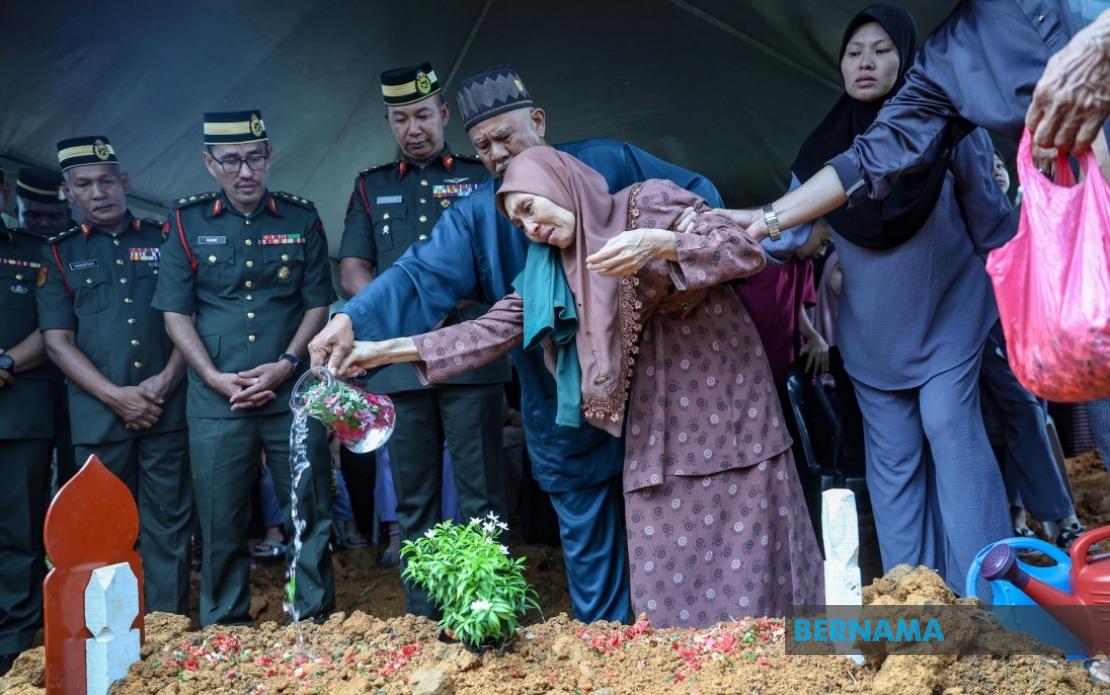
The Malaysian Army said farewell to one of its own on June 17 as Private Siti Khadijah Sungip, a 24-year-old soldier with the First Squadron of the Royal Engineer Regiment, was laid to rest at Taman Sri Lambak Muslim Cemetery in Kluang. Her death came during a routine grenade throwing exercise at Hobart Camp in Gurun, Kedah, when an explosion claimed her life and that of Corporal Norazmi Abu Bakar from the Sixth Battalion of the Royal Malay Regiment. The tragic incident has drawn renewed scrutiny on training protocols and safety measures within military installations across Malaysia.
The explosion occurred at 10.57 am during training activities at the target range, catching both soldiers in its blast radius. Both victims suffered critical injuries that proved fatal en route to medical care. Private Siti Khadijah and Corporal Norazmi were confirmed dead while being transported to Sultan Abdul Halim Hospital in Sungai Petani, their conditions too severe for emergency intervention to save their lives. The incident highlights the inherent dangers that service members face even during what are considered standard operational training exercises.
Private Siti Khadijah's body underwent post-mortem examination at Sultanah Bahiyah Hospital in Alor Setar, completed at approximately 2.30 am before being transferred to her family home. The remains arrived at her parents' residence in Taman Sri Lambak at 12.10 pm, accompanied by First Field Troop Leader Lieutenant Muhammad Lutfil Hadi Osman and four members of the Royal Engineer Regiment from Sangro Camp in Taiping, Perak. This formal military escort reflected the honour accorded to fallen service members and underscored the solemnity surrounding her return to civilian life.
The funeral proceedings drew a substantial gathering of attendees as the Muslim community and military personnel converged to offer condolences to the bereaved family. Military traditions were observed throughout, with the funeral prayer conducted by Major Mohd Azlan Shah Abdul Razak from the TDM Field Engineering Institute at Darul Iman Mosque. The atmosphere at the cemetery was noticeably subdued as colleagues, family members, and friends contemplated the loss of a young soldier in her prime.
Brigadier General Datuk Zulhelmy Masdar, Commander of the 7th Brigade at Headquarters of the 7th Malaysian Infantry Brigade in Mahkota Camp, presided over the symbolic presentation of the Jalur Gemilang to Private Siti Khadijah's father, Sungip Jais, 65. This ceremonial handover of the national flag represents the military's acknowledgment of sacrifice and the nation's debt to families who have lost loved ones in service. The gesture carries profound symbolic weight, recognizing both the individual's contribution and the family's loss.
The incident raises important questions about training safety protocols within the Malaysian Armed Forces. Grenade throwing exercises, while essential for military readiness, carry inherent risks that must be carefully managed through rigorous safety procedures, proper supervision, and appropriate spacing between personnel. The fact that both soldiers were operating in the same area during the explosion suggests potential gaps in how training zones are segregated and monitored during live ordnance exercises.
For Malaysia's military establishment, this tragedy serves as a sobering reminder of the ongoing costs associated with military service. Unlike combat-related casualties that occur in operational theatres, training accidents represent preventable losses that demand institutional attention. Every fatality during routine training invites scrutiny into whether established safety measures are being followed, whether equipment is properly maintained, and whether personnel receive adequate instruction.
The incident also resonates within the broader Southeast Asian military context, where several nations face similar challenges in balancing training effectiveness with personnel safety. Countries across the region, including Thailand, Indonesia, and the Philippines, have experienced comparable accidents during military exercises, suggesting that this represents a systemic challenge requiring coordination and knowledge-sharing among regional armed forces.
Private Siti Khadijah's death is particularly poignant given the increasing number of women serving in Malaysia's armed forces. As the military continues to expand opportunities for female service members, ensuring their safety during all operations—training and otherwise—becomes an issue of both institutional responsibility and equity. Her loss underscores the need for continuous evaluation of safety standards to protect all personnel regardless of gender.
The Malaysian Army's response, which included proper military honours and official representation at the funeral, demonstrates institutional acknowledgment of the incident's significance. However, the real measure of respect to Private Siti Khadijah's memory will be whether the military conducts a thorough investigation into the causes of the explosion and implements any necessary corrective measures to prevent similar incidents.
For the grieving family, the formal military ceremony provided some measure of recognition, yet no amount of protocol can compensate for the loss of a young daughter whose life and career were cut short by circumstances that should never have occurred. The burden now falls on the Malaysian Army to learn from this tragedy and ensure that future training exercises incorporate all necessary safeguards to protect the lives of those who have volunteered to serve their nation.

%22%2F%3E%3C%2Fpattern%3E%3C%2Fdefs%3E%3Crect%20width%3D%22100%25%22%20height%3D%22100%25%22%20fill%3D%22url(%23ph2hy9vg)%22%2F%3E%3Crect%20width%3D%22100%25%22%20height%3D%22100%25%22%20fill%3D%22url(%23ph2hy9vp)%22%2F%3E%3Ctext%20x%3D%2250%25%22%20y%3D%2250%25%22%20text-anchor%3D%22middle%22%20dominant-baseline%3D%22central%22%20fill%3D%22rgba(255%2C255%2C255%2C0.95)%22%20font-family%3D%22Georgia%2C%20'Times%20New%20Roman'%2C%20serif%22%20font-weight%3D%22700%22%20font-size%3D%22272%22%20letter-spacing%3D%22-0.02em%22%3EAnwar%3C%2Ftext%3E%3C%2Fsvg%3E)