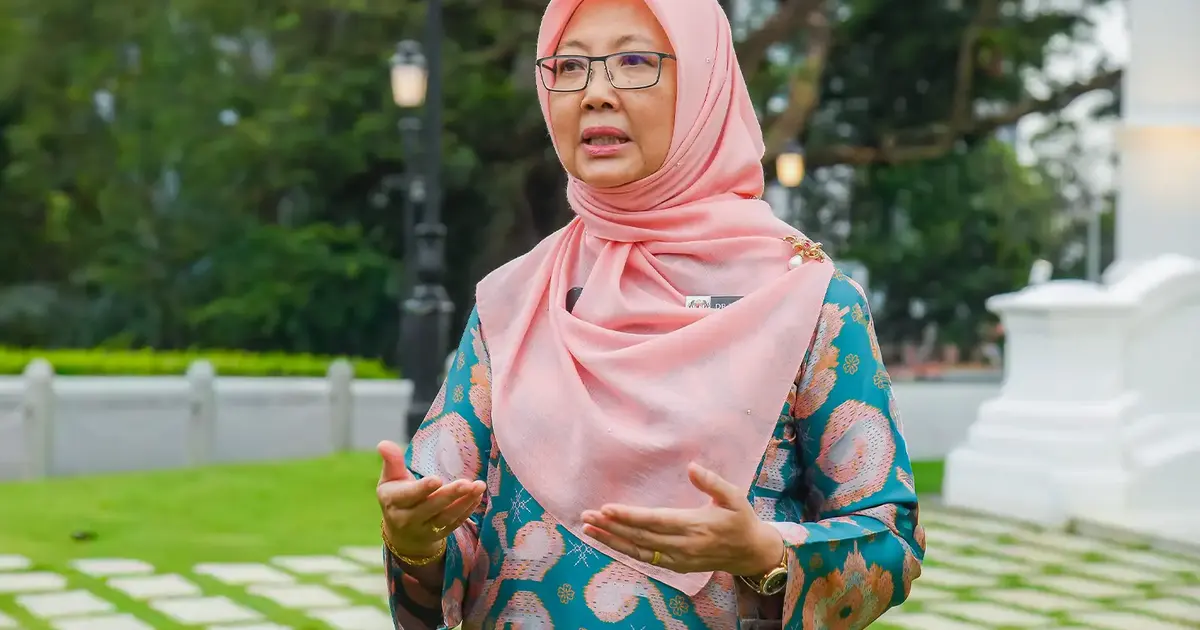
PKR vice-president Zaliha Mustafa has questioned the reasoning behind Johor BN chairman Onn Hafiz Ghazi's recent call for Pakatan Harapan to publicly identify its poster boy ahead of state elections, pointing out the lack of any guarantee that a named candidate would actually be appointed menteri besar.
The demand has created an unusual political puzzle in Malaysia's southern state, where electoral strategy and coalition dynamics intersect. Onn Hafiz's request, made as the BN-led government maintains its control of Johor's helm, presupposes that Pakatan Harapan would voluntarily reveal its preferred leadership choice before going to the polls. This transparency demand contradicts conventional campaign strategy, where coalitions typically maintain flexibility in their leadership arrangements until victory becomes certain.
Zaliha's scepticism reveals a deeper tension within Malaysian coalition politics. The appointment of a state chief minister involves multiple stakeholders—the winning party must secure parliamentary majority, and in Malaysia's context, the sultan's consent remains essential. Even if Pakatan Harapan were to nominate and campaign around a specific personality, there is no certainty that this individual would ultimately occupy the menteri besar position following an electoral victory. Procedural and constitutional requirements mean that post-election negotiations could reshape political alignments entirely.
The exchange underscores how Malaysian state politics operates within a framework where electoral campaigns and actual governance arrangements often diverge. A named poster boy could serve as a campaign focal point, yet the eventual chief minister might be determined by coalition negotiations, party dynamics, or even constitutional considerations post-election. By pressing Pakatan Harapan to commit to a specific figure, Onn Hafiz may be attempting to box in the opposition coalition or create internal pressure should the named candidate prove unpopular.
Johor's political landscape has undergone significant transformation in recent years, with Pakatan Harapan making considerable inroads despite BN's historical dominance in the state. The 2023 general election demonstrated substantial support for the opposition coalition across the southern region, suggesting that electoral fortunes could shift in state-level contests. Against this backdrop, any demand for advance disclosure of leadership structures takes on heightened significance for both coalitions' electoral calculations.
The PKR vice-president's pushback reflects broader coalition thinking within Pakatan Harapan. Revealing a designated poster boy prematurely could invite targeted attacks on that individual before the campaign formally intensifies, allowing BN and their allies to build a negative narrative over months. Additionally, premature announcements limit coalition flexibility should circumstances change—personnel availability, party dynamics, or voter sentiment might necessitate different leadership arrangements by the time elections are called.
Onn Hafiz's strategy appears designed to force Pakatan Harapan into an uncomfortable corner, testing whether the opposition would risk committing to an individual or maintaining strategic ambiguity. The demand also potentially plays to BN's strength in Johor, where the coalition maintains significant institutional advantages and ground organisation. By demanding transparency from Pakatan Harapan, the government can portray the opposition as evasive or uncertain about leadership, a narrative that might resonate with swing voters who prize decisiveness and clarity.
Zaliha's response instead emphasises the technical impracticality of Onn Hafiz's demand. In Malaysian constitutional terms, the menteri besar position requires not only electoral success but also royal approval and, in some configurations, support from other coalition partners. No opposition party can unilaterally guarantee that a named poster boy will become chief minister, because state governance involves collective decision-making among coalition members and constitutional processes beyond partisan control. This reality gap between campaign rhetoric and constitutional mechanics is what Zaliha appears to be highlighting.
The exchange also reflects PKR's position as a multi-state player within Pakatan Harapan. As a party competing across Malaysia, PKR must balance various state-level arrangements and coalition agreements. Naming a specific poster boy for Johor could create precedents or expectations for other states, complicating internal coalition negotiations. This broader coalition management concern likely underpins PKR's reluctance to accede to Onn Hafiz's demand, even if a particular figure were being considered.
For Malaysian voters tracking state political developments, this exchange illuminates the gap between electoral posturing and actual governance structures. Political campaigns often feature named figures and clear leadership hierarchies, yet the mechanics of Malaysian politics—with sultans' constitutional roles and coalition-building requirements—mean that advance commitments carry significant risks. Zaliha's questioning of the demand's logic reminds political observers that what appears straightforward in campaign terms becomes deeply complicated when constitutional frameworks and multi-party coalition dynamics are considered.
As Johor moves toward its next electoral cycle, both BN and Pakatan Harapan will continue calibrating their messaging and strategy. The debate over whether opposition should name its poster boy may ultimately prove less significant than ground-level campaigning, coalition coherence, and voter sentiment. Yet it reveals how Malaysian state politics remains shaped by constitutional complexity, multi-party dynamics, and the interplay between electoral campaigns and the actual mechanisms through which chief ministers are selected and installed.


%22%2F%3E%3C%2Fpattern%3E%3C%2Fdefs%3E%3Crect%20width%3D%22100%25%22%20height%3D%22100%25%22%20fill%3D%22url(%23ph2hy9vg)%22%2F%3E%3Crect%20width%3D%22100%25%22%20height%3D%22100%25%22%20fill%3D%22url(%23ph2hy9vp)%22%2F%3E%3Ctext%20x%3D%2250%25%22%20y%3D%2250%25%22%20text-anchor%3D%22middle%22%20dominant-baseline%3D%22central%22%20fill%3D%22rgba(255%2C255%2C255%2C0.95)%22%20font-family%3D%22Georgia%2C%20'Times%20New%20Roman'%2C%20serif%22%20font-weight%3D%22700%22%20font-size%3D%22272%22%20letter-spacing%3D%22-0.02em%22%3EAnwar%3C%2Ftext%3E%3C%2Fsvg%3E)