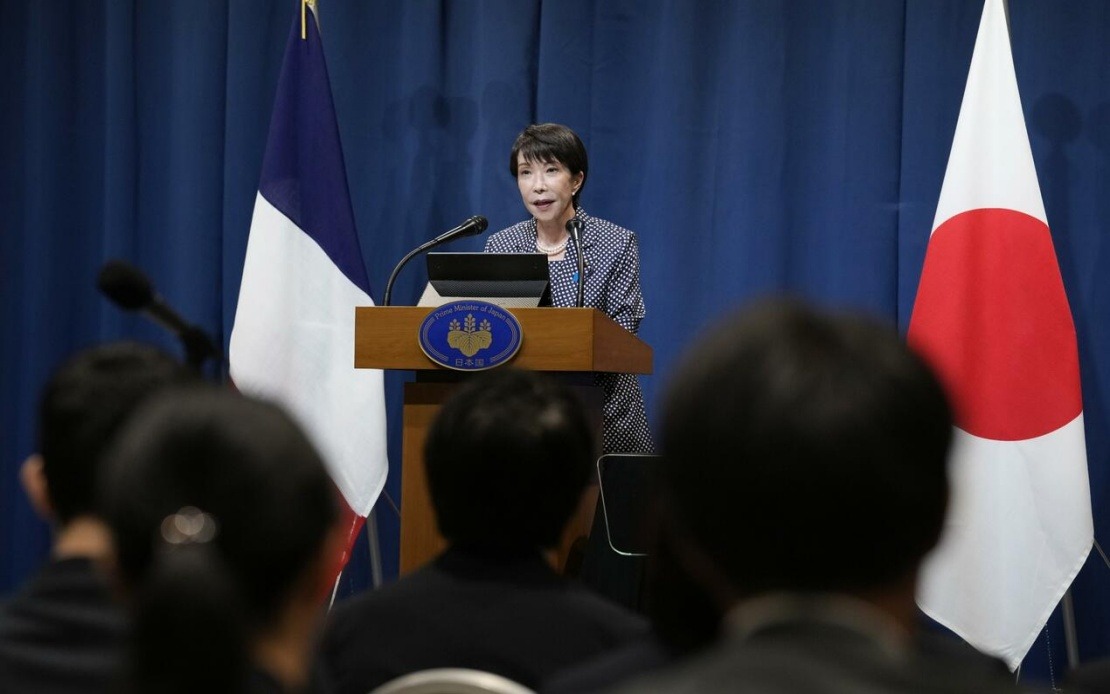
Prime Minister Sanae Takaichi faces mounting domestic political headwinds as her Cabinet's public approval rating has slumped to 55.8 per cent, marking the weakest standing since she assumed office last October. The decline, revealed in a Kyodo News poll conducted over the weekend, underscores growing public dissatisfaction with her administration's handling of pressing national concerns ranging from economic hardship to regional security challenges.
Japan's resource-constrained economy remains acutely vulnerable to disruptions in global trade flows, particularly through strategic chokepoints like those affected by ongoing West Asia tensions. The lingering uncertainty surrounding the region's geopolitical stability has compounded concerns among ordinary Japanese households already struggling with the persistent weight of elevated living costs. This intersection of external vulnerability and internal economic stress has created a political environment increasingly challenging for the Takaichi administration.
On the specific question of military involvement in regional security, public opinion appears cautiously restrained. According to the poll, 54.7 per cent of survey respondents opposed deploying the Japanese Self-Defence Forces to critical maritime routes to safeguard commercial shipping passages. This represents a substantial majority favouring a non-interventionist posture, though a meaningful minority of 36.6 per cent argued that such deployment remains necessary. The timing of the survey—conducted after the United States and Iran announced preliminary peace negotiations that included Tehran's agreement to reopen the Strait of Hormuz—suggests the public may be responding to shifting diplomatic dynamics that reduce the perceived urgency for military action.
The economic dimension of public discontent deserves particular attention for Southeast Asian observers. Japan's struggle with elevated prices reflects a broader regional pattern affecting multiple economies across the Indo-Pacific, including Malaysia. This creates both a cautionary tale and a point of regional solidarity, as policymakers across Southeast Asia contend with similar inflationary pressures that erode consumer purchasing power and voter confidence.
When asked about fiscal measures to address consumer hardship, Japanese households revealed pragmatic but ambitious preferences regarding consumption tax policy. The largest share of respondents, comprising 43.9 per cent, indicated willingness to accept a reduction in the consumption tax rate on food and beverages from its current eight per cent level down to one per cent, provided such a reduction could be implemented expeditiously. This indicates voters prioritise speed of implementation over maximalist outcomes.
However, a substantial 22.6 per cent of respondents endorsed the more aggressive campaign pledge from the ruling parties to eliminate the consumption tax on food and beverages entirely, reducing it to zero. This split reveals internal disagreement within the electorate regarding the appropriate balance between meaningful relief and fiscal prudence. The divergence also suggests political vulnerability for the Takaichi administration, which must navigate between competing expectations about how aggressively to pursue tax relief without exacerbating Japan's already substantial public debt challenges.
For Malaysia and other Southeast Asian nations monitoring Japan's political evolution, these developments carry instructive significance. Japan's experience demonstrates how regional security anxieties and domestic economic stress can simultaneously undermine political support for sitting governments, even when those governments have not been in office for extended periods. The relatively rapid descent of Takaichi's approval rating—from higher levels at her October inauguration to 55.8 per cent in June—illustrates the speed with which public sentiment can shift when multiple pressures converge.
The consumption tax debate also resonates across Southeast Asia, where many governments grapple with indirect taxation structures and their impact on vulnerable populations. Japan's ruling parties' commitment to food and beverage tax relief reflects broader regional pressure on governments to shield consumers from the regressive effects of consumption-based taxation.
Looking forward, the Takaichi administration faces a narrowing window to demonstrate tangible progress on both economic and security fronts. With approval hovering just above the halfway mark, further deterioration could threaten her political longevity and complicate her ability to advance major policy initiatives. The forthcoming months will prove crucial in determining whether recent diplomatic progress in West Asia continues to reduce security-related political pressure, and whether targeted tax measures can effectively address consumer concerns before the next election cycle.
For regional analysts, Japan's political trajectory warrants close observation. As the world's third-largest economy and a crucial anchor of regional stability, domestic Japanese politics influence investment flows, security partnerships, and economic policy coordination across the entire Indo-Pacific region, making Takaichi's political standing a matter of regional significance beyond Tokyo's borders.