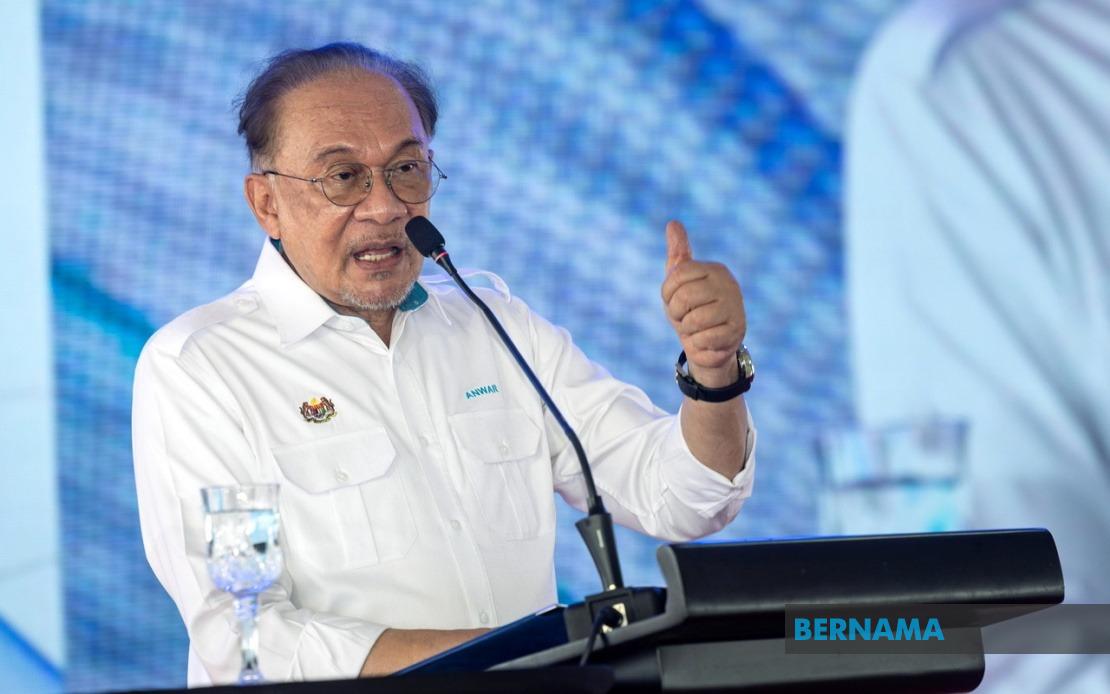
Malaysia has moved to fortify its energy security through strategic partnerships with Russia and Turkmenistan, according to Prime Minister Datuk Seri Anwar Ibrahim. Speaking at the Setia Fontaines Industrial Park groundbreaking ceremony in Kepala Batas, he outlined how these bilateral relationships will underpin the nation's hydrocarbon supply for decades ahead, addressing one of Southeast Asia's most pressing economic concerns.
During his recent diplomatic visit to Russia, Anwar secured assurances from President Vladimir Putin regarding an extended supply arrangement spanning at least two decades. The proposed agreement encompasses crude oil, natural gas, and diesel—commodities fundamental to Malaysia's industrial base, electricity generation, and transportation infrastructure. The commitment reflects deepening bilateral ties that extend beyond traditional trade channels into the realm of critical resource security.
The Turkmenistan initiative carries even more significant implications for Malaysia's long-term positioning. During his official visit to the Central Asian nation, Anwar negotiated expanded Malaysian access to one of the world's most substantial proven gas reserves. This breakthrough followed sustained diplomatic engagement, including the December 2024 state visit to Malaysia by Turkmenistan President Serdar Berdimuhamedov. The phased improvement in relations has culminated in concrete sectoral access that substantially alters Malaysia's energy equation.
For Malaysian policymakers, the Turkmenistan arrangement represents a transformative opportunity. Access to Caspian Basin reserves, among the planet's most abundant, effectively guarantees decades of supply stability for both domestic consumption and downstream industrial activities. The Prime Minister emphasised that these secured volumes extend far beyond meeting Malaysia's immediate requirements, instead enabling the nation to position itself as a reliable energy exporter to the region's highest-demand markets.
The strategic calculus behind these partnerships reflects Malaysia's pragmatic approach to energy geopolitics. China, Japan, and South Korea—three of Asia's most energy-intensive economies—continuously seek diversified supply sources to mitigate concentration risk and secure competitive pricing. By establishing privileged access to Russian and Turkmen resources, Malaysia can facilitate re-export arrangements and middle-stream trading activities, converting geographic advantage and diplomatic relationships into economic value. This positions the nation as an intermediary within Asian energy flows, complementing its existing role as a liquefied natural gas (LNG) producer.
The energy security dimension resonates deeply within Malaysia's development narrative. Adequate hydrocarbon supply at predictable costs directly influences electricity tariffs, industrial competitiveness, and manufacturing sector vitality. Smaller nations with limited domestic reserves face particular vulnerability to price volatility and supply disruptions on global markets. By securing long-term contractual commitments with established producers, Malaysia insulates itself from sudden market shocks that have periodically destabilised regional economies.
From a geopolitical standpoint, these agreements illustrate Malaysia's commitment to maintaining balanced international relationships across multiple power blocs. The partnerships with Russia and Turkmenistan complement existing energy relationships with other suppliers, including Australia, Indonesia, and the Middle East. This diversification strategy reflects recognition that energy security cannot rest upon single-source dependency, particularly when geopolitical tensions periodically threaten supply routes and producer stability.
The timing of these announcements carries significance for regional energy markets. As global energy transitions accelerate and renewable capacity expands, conventional hydrocarbon demand patterns face fundamental restructuring. Securing guaranteed supplies during this transitional period provides Malaysia with temporal flexibility to adapt its energy infrastructure, industrial base, and export positioning without confronting sudden scarcity or price escalation.
Anwar's emphasis on leveraging international relationships for national benefit underscores a broader strategic doctrine. Beyond energy acquisition, these partnerships create diplomatic capital, facilitate technology transfer opportunities, and strengthen Malaysia's influence within multilateral forums. Energy cooperation frequently opens pathways for expanded trade, investment, and people-to-people exchange that generate broader developmental benefits.
The industrial park ceremony itself, showcasing contemporary infrastructure investment, symbolises the convergence between energy security and economic advancement. Reliable, affordable energy supplies attract manufacturing investment, support logistics hub development, and enable value-added processing activities. Turkmen and Russian resource flows, when coupled with Malaysia's manufacturing capabilities and strategic location, create conditions for enhanced competitiveness within supply chains serving East and Southeast Asia.
Implementing these agreements will require sustained diplomatic attention and regulatory adaptation. Commercial frameworks must accommodate diverse contractual terms, pricing mechanisms, and delivery modalities. Malaysian institutions will need capacity to manage long-term supplier relationships, negotiate pricing adjustments across commodity cycles, and integrate foreign supplies into existing distribution infrastructure.
Looking forward, these energy partnerships establish a foundation for Malaysia's resilience amid global uncertainties. By combining conventional supply security with transitional positioning toward sustainable energy futures, the nation preserves economic stability while maintaining flexibility for longer-term energy evolution. The arrangements reflect sophisticated statecraft that recognises energy as both immediate necessity and strategic asset in regional competition.