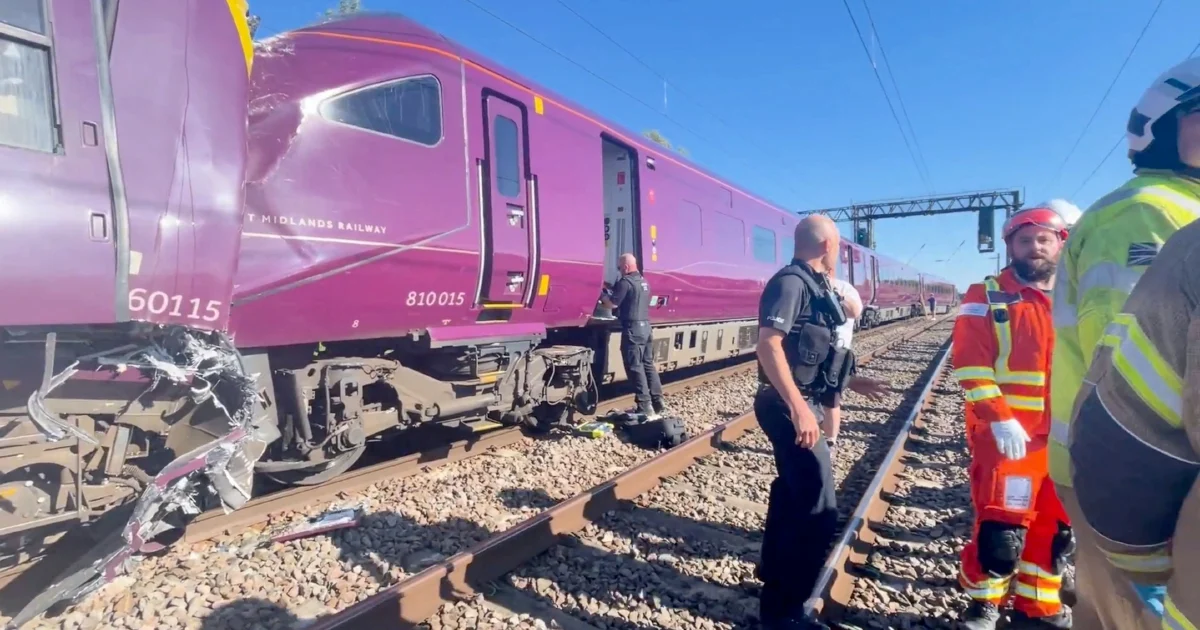
A collision between two passenger trains north of London on Friday has claimed at least one life and left dozens of passengers and staff injured, with British emergency services treating 11 of the casualties as being in critical condition. The incident represents one of the most serious railway accidents in the UK in recent years and has reignited broader discussions about rail safety standards across British transport networks.
Emergency responders attended the scene swiftly, deploying paramedics, firefighters, and specialist rescue teams to address what quickly emerged as a major incident. The scale of injuries—with multiple casualties requiring intensive care—necessitated a coordinated response involving hospitals across the region. The location in the densely populated area north of London meant that considerable resources could be mobilised rapidly, though the initial chaos at the scene presented significant challenges for rescue personnel attempting to extract trapped passengers from the wreckage.
The collision involved two full passenger trains carrying what would have been substantial numbers of commuters or long-distance travellers. Both trains suffered significant damage in the impact, with the force of the collision severe enough to derail carriages and trap occupants. Initial reports suggest the accident occurred along a busy commuter corridor, meaning the trains involved were likely well-populated at the time of the collision. The number of people on board elevated the scale of the emergency response required and the potential for casualties.
Railway engineers and accident investigators have begun preliminary examinations of the collision site to determine the precise sequence of events leading to the incident. Multiple factors could have contributed to the accident, including signalling failures, speed violations, adverse weather conditions, or operational errors. The investigation will necessarily be thorough and detailed, as understanding what went wrong is essential for preventing similar occurrences on British rail networks. The proximity of the collision to London suggests this section of track experiences substantial traffic volume, making safety protocols particularly critical in this zone.
For Malaysian readers, this incident provides sobering context for evaluating rail safety standards internationally. While Malaysia's rail networks have experienced their own significant accidents—including the Kampung Baru train accident in 2017—developed nations like the United Kingdom are not immune to major transport disasters. The incident underscores how even countries with mature infrastructure and extensive safety regulations can face serious railway emergencies. This comparative perspective is valuable for understanding that rail safety requires constant vigilance, regular equipment maintenance, and ongoing investment regardless of a nation's development level.
The UK's railway system, managed through a combination of private operators and regulated by the Office of Rail and Road, operates under strict safety frameworks. Despite these systems, accidents still occur, suggesting that preventing rail disasters involves more than regulatory oversight alone. Training standards, real-time operational decisions, infrastructure maintenance budgets, and human factors all intersect in determining safety outcomes. The collision will likely prompt comprehensive reviews of safety protocols not only on the specific line where the accident occurred but potentially across broader sections of the UK rail network.
Passenger reaction to the collision will inevitably shape public perception of rail safety in Britain. For travellers accustomed to viewing trains as a relatively secure transportation mode, such incidents undermine confidence in the system. The psychological impact of major transport accidents extends beyond the immediate casualties to influence travel choices and public demand for enhanced safety measures. Media coverage and official statements about the accident's cause will heavily influence whether the public perceives this as an isolated failure or symptomatic of systemic problems within British railways.
The emergency response itself will be subject to detailed review by relevant authorities. Evaluation of how quickly responders arrived, the efficiency of rescue operations, hospital capacity to handle multiple serious casualties, and coordination between different emergency services will all feature in post-incident analysis. These operational lessons, when properly documented and shared, contribute to incremental improvements in how future transport emergencies are managed across different countries and emergency services jurisdictions.
For the families and colleagues of those affected by the collision, the immediate priority is medical treatment for the injured and support for those grieving the deceased. The psychological trauma of surviving a serious accident, combined with physical injuries, often requires extended recovery periods. Support services for survivors and their families, alongside workplace counselling for railway staff affected by the incident, form important elements of response that extend well beyond the initial emergency phase.
This collision will undoubtedly feature prominently in discussions about the future of Britain's railways and the investment required to maintain safe operations across ageing infrastructure networks. The incident adds to growing concerns about transport safety and the adequacy of funding for preventive maintenance and system upgrades. As various authorities investigate the underlying causes, the broader question of how to balance cost efficiency with safety in operating large transport networks remains persistently challenging for policymakers across the developed world.