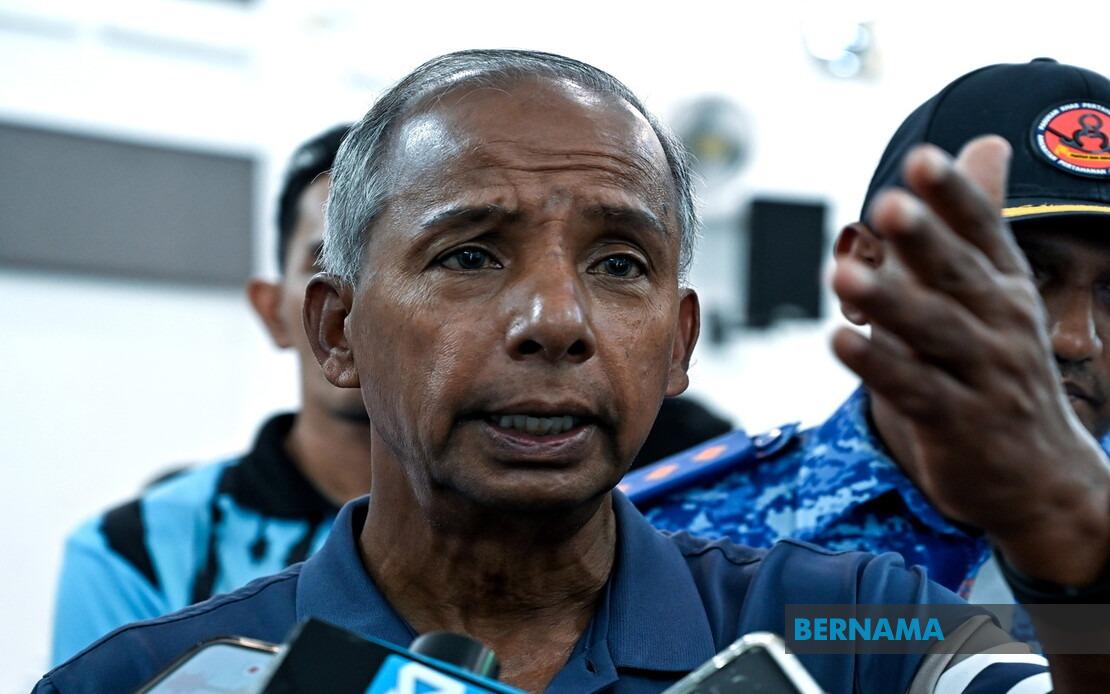
A freak weather phenomenon has left the Bercham area near Ipoh reeling from unprecedented damage, with more than 240 residential properties and eight business premises affected by a violent storm that struck yesterday afternoon. Ipoh Barat Member of Parliament M. Kulasegaran, who also serves as Deputy Minister in the Prime Minister's Department (Law and Institutional Reform), characterised the incident as highly unusual for the region, stating that such an event had never been documented in the locality before.
Initial investigations point to a landspout—a tornado-like vortex that forms over land and is distinct from typical tropical downpours—as the likely cause of the destruction. The storm hit around 3 pm and left a trail of severe structural damage across five distinct locations in and around the township. What distinguishes this event from previous weather disturbances in Perak is the intensity and nature of the destruction. Kulasegaran noted that historical storms in the region have typically resulted in fallen trees and minor property damage, but this phenomenon left impacts more akin to a small typhoon, with widespread roof failures being a critical concern for residents.
The Ipoh district police recorded 121 damage reports as of this morning, though authorities acknowledge these figures remain incomplete. Ipoh district police chief ACP Muhammad Najib Hamzah explained that the full scope of destruction cannot yet be confirmed, as many homeowners were away on vacation or had leased their properties to tenants at the time of the incident. The police have implemented a controlled access protocol at affected zones, restricting movement and establishing perimeter checkpoints to ensure the security of damaged properties during daylight hours when cleaning and repair activities are most intense. Personnel from traffic and patrol units have been stationed throughout the affected areas to manage access and coordinate with repair contractors.
Crucially, the incident has resulted in no fatalities, a significant factor in what could have been a far more tragic outcome. The Perak Civil Defence Force (APM) Special Team responded to numerous emergency calls reporting uprooted trees, structural damage to roofs, and downed electricity infrastructure. Captain (PA) C. Sehgar, the operations chief of the APM Special Team, confirmed that these immediate hazards have been systematically addressed through coordinated response efforts. The Ipoh City Council (MBI) has undertaken primary responsibility for debris clearance and site remediation, supported by APM personnel and assistance from the local community.
The government's response has been swift and multi-departmental. The Social Welfare Department (JKM) has begun the process of victim registration and relief distribution, working in tandem with village headmen and other relevant agencies to ensure assistance reaches those most affected. Kulasegaran encouraged residents to lodge formal police reports, as these documents are essential for streamlining the aid distribution mechanism and ensuring equitable allocation of government support. The Implementation Coordination Unit (ICU) under the Prime Minister's Department was engaged to mobilise contractors for emergency structural repairs, particularly to address roof damage that poses ongoing risk should further rainfall occur.
The timing of the storm creates compounding concerns for residents. With the monsoon season active and the region vulnerable to continued precipitation, partially repaired homes remain at heightened risk of further water infiltration and structural compromise. This urgency explains the government's priority in expediting temporary and permanent repair works. Kulasegaran emphasised during his inspection at Dewan Senator Dato' Shamsuddin in Kampung Tersusun Tasek that immediate repairs, if possible within the day, were being pursued to protect families from weather-related complications during the recovery period.
The incident highlights a growing awareness in Malaysia's meteorological and civil protection spheres regarding rare atmospheric phenomena. Landspouts, while distinct from conventional tornadoes, can generate localised wind speeds and pressure differentials sufficient to inflict severe structural damage comparable to major storms. The Bercham event represents a data point in understanding how climate variability and atmospheric conditions in the equatorial and tropical regions of Southeast Asia may be producing increasingly unpredictable weather patterns. For Perak specifically, which has not historically experienced such phenomena, the incident underscores the need for updated emergency response protocols and public awareness regarding unusual meteorological events.
From a regional perspective, the Bercham storm is instructive for other Malaysian states and Southeast Asian nations regarding disaster preparedness. While the nation's civil defence and police forces demonstrated effective coordination during the immediate response phase, the challenge now lies in the medium-term recovery phase. Housing damaged in this manner typically requires weeks or months for full restoration, during which residents face displacement, financial hardship, and emotional distress. Insurance coverage for weather-related damage varies significantly among Malaysian homeowners, and many in the affected kampungs may lack adequate policies, necessitating targeted government assistance.
Authorities have prioritised transparency and communication with affected residents as part of the recovery strategy. The completion of victim registration at designated centres allows officials to stratify assistance based on damage severity and household vulnerability. This administrative framework, coordinated across multiple agencies including JKM, police, APM, and the ICU, represents a comprehensive governmental approach to crisis management. However, the acknowledged difficulty in confirming exact casualty and damage figures underscores the logistical challenges inherent in responding to sudden, geographically dispersed disasters in densely populated urban-rural zones.
Looking forward, the Bercham incident will likely trigger a review of building codes and structural standards in Perak, particularly regarding roof anchoring and wind resistance. The Malaysian Meteorological Department may also be prompted to enhance monitoring capabilities for unusual atmospheric phenomena in the region. For residents of Bercham and surrounding townships, the psychological impact of experiencing such an unprecedented event will necessitate psychosocial support services alongside physical reconstruction efforts. The coming weeks will be critical in determining whether initial relief efforts translate into sustained recovery support and whether the community emerges with strengthened resilience and preparedness.