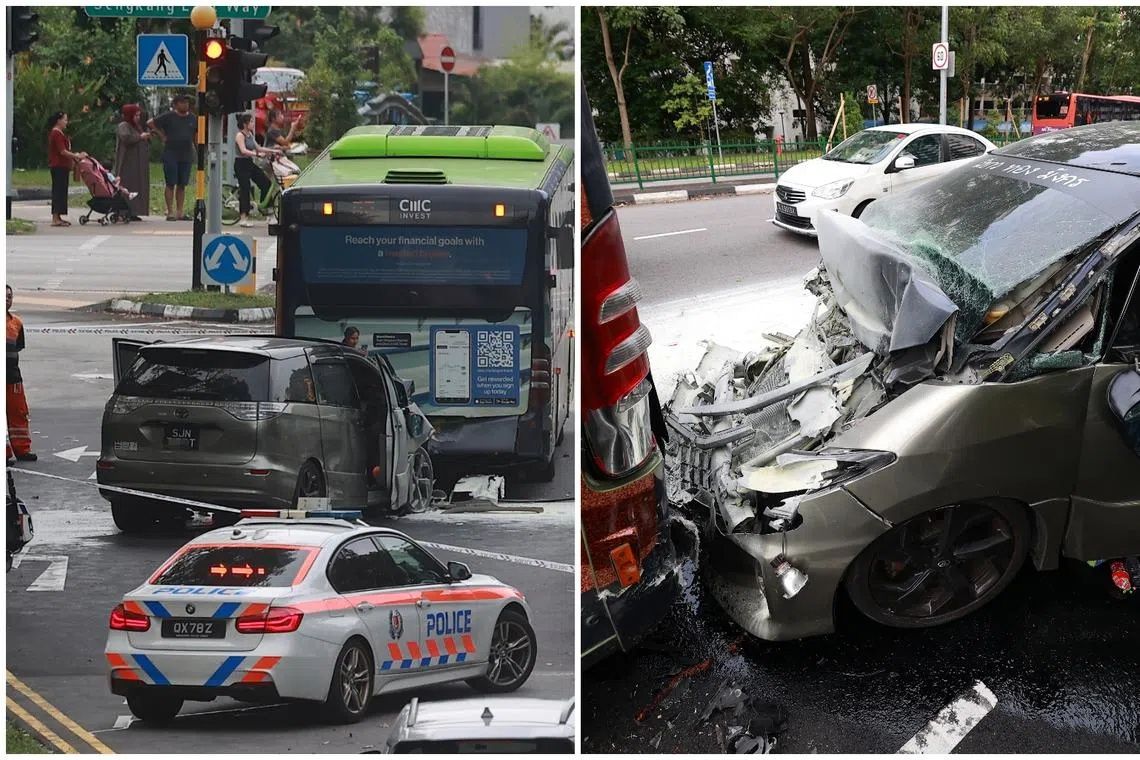
Singapore's roads have become increasingly dangerous due to a troubling rise in accidents involving drivers under the influence of drugs and novel substances, according to medical professionals and law enforcement authorities. Within a single 12-day period in June 2025, police charged three separate motorists with drug-impaired driving, each case emerging only after serious collisions occurred—underscoring how difficult it remains to detect substance-affected drivers before tragedy strikes.
The substances involved in these incidents reflect evolving drug trends that authorities are still adapting to address. Two of the charged men had allegedly consumed methamphetamine, commonly known as Ice, while operating their vehicles. The third case involved etomidate, an anaesthetic agent increasingly being inhaled through modified e-vapourisers marketed as Kpods. This emerging delivery method has complicated law enforcement efforts and public health responses across the region, as the substance produces impairment comparable to severe alcohol intoxication but lacks the established detection protocols that traditional drugs have.
Dr Jonathan Tang, a clinical toxicologist at the National University Hospital's Emergency Medicine Department, has treated multiple victims of traffic accidents directly attributable to etomidate-laced vape use. His clinical observations reveal a pattern of concerning outcomes. The anaesthetic substance impairs fundamental driving capabilities—slowing reaction times, degrading hazard perception, and undermining vehicle control. Beyond these acute impairment effects, Tang notes that etomidate use can trigger psychiatric complications including mood depression, heightened aggression, and impulsive behaviour that occasionally escalates to suicide attempts. These psychological effects compound the physical impairment, creating layered dangers not only for the driver but for all road users sharing the same space.
The statistics underlying this crisis are staggering. Between 2023 and 2025, police recorded 38 traffic accidents explicitly linked to drug or etomidate use, resulting in 19 fatalities. Of these fatal collisions, ten involved conventional drugs while nine involved etomidate specifically. The trend has sharply worsened in 2025, with 29 of the 38 total accidents occurring within that year alone. Eighteen of these involved etomidate, and seven involved combinations of both drug types. These figures suggest not merely an awareness problem but an actual intensification of substance-impaired driving across the island nation.
One particularly tragic case illustrates the human toll. On May 13, 2025, a car in Punggol collided with a bus while under the control of an etomidate-affected driver. Police discovered 42 vapes and over 1,200 pods in the vehicle, many containing etomidate. A 28-year-old female passenger died in the collision, with toxicology confirming etomidate in both the driver's and victim's bloodstreams. This incident galvanised parliamentary attention, with Member of Parliament Valerie Lee raising the matter in February, questioning whether the Traffic Police implemented standardised protocols for assessing drug use among accident-involved motorists.
Coordinating Minister for National Security K. Shanmugam confirmed that Traffic Police do assess drivers involved in collisions for signs of impaired driving, and will mandate blood testing when drug or etomidate use is suspected. Drivers found to have operated vehicles under substance influence face criminal liability under existing road traffic legislation. The minister's response acknowledged the severity of the situation, revealing the 38-accident statistic and indicating that authorities recognise this as a systemic challenge requiring both enforcement and public awareness responses.
Recent prosecutions demonstrate the legal consequences now being applied. Mohamed Firdouz Mohamed Akram, aged 36, faced multiple charges in June 2025 after his vehicle collided with a taxi in Kallang, injuring both the taxi driver and a passenger. Having allegedly consumed Ice, Firdouz abandoned his vehicle at the scene and fled, only to be apprehended later. Police recovered drugs, vaporisers, and weapons from his abandoned car. Similarly, Puah Zhe Cong, 34, was charged with seven offences including dangerous driving causing death after an etomidate-influenced collision that killed one person and injured two others. A third case involved Sivakandesh, 32, charged with methamphetamine-influenced driving after his Mercedes-Benz struck two bollards, a parked vehicle, and a rubbish chute in Yishun, with the driver apparently removing registration plates post-accident.
The legal penalties available to courts reflect an escalating enforcement posture. First-time offenders face up to one year imprisonment, fines reaching S$10,000, or both. Repeat offenders can receive up to two years imprisonment and fines of S$20,000, creating substantial financial and custodial consequences. However, legal remedies arrive only after collisions occur—pointing to a fundamental enforcement gap in detecting impaired drivers before they cause harm.
Broader road safety trends add urgency to this crisis. Singapore recorded 149 traffic deaths in 2025, marking a 10-year high and exceeding the 141 deaths recorded in 2016. The 142 deaths in 2024 represented a year-on-year increase, indicating deteriorating road safety beyond drug-related incidents alone. Injury numbers similarly climbed from 9,342 in 2024 to 9,955 in 2025. These aggregated statistics suggest multiple contributing factors, though the documented surge in substance-influenced collisions represents a particularly concerning component of this deterioration.
For Malaysian readers and Southeast Asian observers, Singapore's emerging drug-impaired driving problem carries direct relevance. Etomidate-laced Kpods and Ice represent transnational substance trends likely to spread across the region's interconnected populations and transport networks. Malaysia's own road safety challenges, which consistently rank among Asia's highest, could be compounded by similar substance abuse patterns. The relative ease of modifying e-vapourisers to deliver anaesthetic compounds suggests that detection and enforcement responses developed in one jurisdiction remain insufficient until coordinated regionally.
The medical and enforcement communities in Singapore are now actively warning against substance-impaired driving, with police statements explicitly characterising the behaviour as dangerous and irresponsible. Emergency physicians like Dr Tang are translating clinical evidence into public safety advocacy, documenting how these substances fundamentally compromise driving capability. However, public health experts acknowledge that awareness campaigns and post-accident enforcement represent only partial solutions. Prevention requires detecting impaired drivers before collisions occur—a challenge that existing roadside testing capabilities may not adequately address, particularly for novel substances like etomidate that lack established field screening protocols.
The road ahead demands multifaceted intervention. Enhanced driver education about substance effects, improved roadside detection capabilities, stricter penalties, and border controls on Kpods and related vaping products all warrant consideration. For regional policymakers, Singapore's experience serves as an early warning that drug-impaired driving represents an evolving, serious threat to road safety that requires urgent attention before patterns become entrenched across Southeast Asia.
%22%2F%3E%3C%2Fpattern%3E%3C%2Fdefs%3E%3Crect%20width%3D%22100%25%22%20height%3D%22100%25%22%20fill%3D%22url(%23ph3os26g)%22%2F%3E%3Crect%20width%3D%22100%25%22%20height%3D%22100%25%22%20fill%3D%22url(%23ph3os26p)%22%2F%3E%3Ctext%20x%3D%2250%25%22%20y%3D%2250%25%22%20text-anchor%3D%22middle%22%20dominant-baseline%3D%22central%22%20fill%3D%22rgba(255%2C255%2C255%2C0.95)%22%20font-family%3D%22Georgia%2C%20'Times%20New%20Roman'%2C%20serif%22%20font-weight%3D%22700%22%20font-size%3D%22226%22%20letter-spacing%3D%22-0.02em%22%3EHAWANA%3C%2Ftext%3E%3C%2Fsvg%3E)
%22%2F%3E%3C%2Fpattern%3E%3C%2Fdefs%3E%3Crect%20width%3D%22100%25%22%20height%3D%22100%25%22%20fill%3D%22url(%23phg6qg)%22%2F%3E%3Crect%20width%3D%22100%25%22%20height%3D%22100%25%22%20fill%3D%22url(%23phg6qp)%22%2F%3E%3Ctext%20x%3D%2250%25%22%20y%3D%2250%25%22%20text-anchor%3D%22middle%22%20dominant-baseline%3D%22central%22%20fill%3D%22rgba(255%2C255%2C255%2C0.95)%22%20font-family%3D%22Georgia%2C%20'Times%20New%20Roman'%2C%20serif%22%20font-weight%3D%22700%22%20font-size%3D%22320%22%20letter-spacing%3D%22-0.02em%22%3EDr%3C%2Ftext%3E%3C%2Fsvg%3E)
%22%2F%3E%3C%2Fpattern%3E%3C%2Fdefs%3E%3Crect%20width%3D%22100%25%22%20height%3D%22100%25%22%20fill%3D%22url(%23ph4twxvg)%22%2F%3E%3Crect%20width%3D%22100%25%22%20height%3D%22100%25%22%20fill%3D%22url(%23ph4twxvp)%22%2F%3E%3Ctext%20x%3D%2250%25%22%20y%3D%2250%25%22%20text-anchor%3D%22middle%22%20dominant-baseline%3D%22central%22%20fill%3D%22rgba(255%2C255%2C255%2C0.95)%22%20font-family%3D%22Georgia%2C%20'Times%20New%20Roman'%2C%20serif%22%20font-weight%3D%22700%22%20font-size%3D%22320%22%20letter-spacing%3D%22-0.02em%22%3E95%3C%2Ftext%3E%3C%2Fsvg%3E)