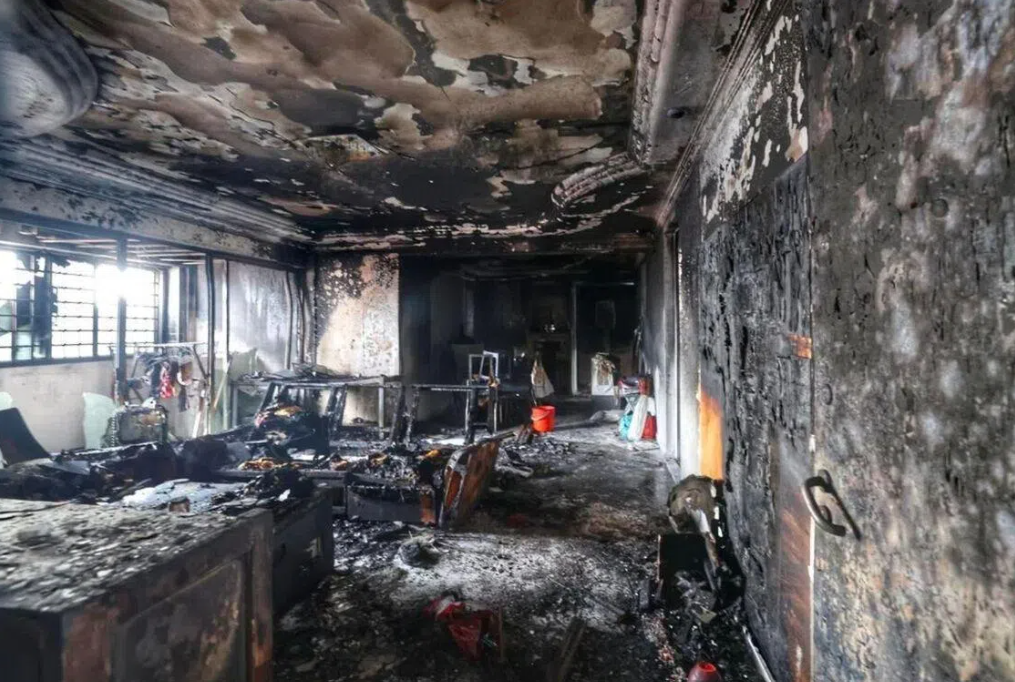
An early-morning fire at Block 842 Jurong West Street 81 saw rescue teams extract two people from a high-rise residential unit as flames consumed the living quarters on June 17. The Singapore Civil Defence Force (SCDF) responded to the emergency call at around 3.35am, arriving to find the 13th-storey flat engulfed in smoke and fire. The swift intervention by firefighters prevented further casualties, though the incident underscores the ongoing risks posed by electrical hazards in densely populated residential blocks across the island.
The rescue operation unfolded under challenging conditions, with SCDF personnel navigating through thick smoke to reach occupants trapped within the burning unit. Members of the four-person household received treatment at Singapore General Hospital, while a wider precautionary evacuation saw approximately 40 other residents move to safety. This broader displacement reflects standard fire-response protocols designed to protect neighbouring units from potential spread or smoke inhalation, demonstrating the coordinated approach authorities take to such incidents in high-rise settings.
Preliminary findings point to an electrical origin within the living room as the likely cause of the blaze. This conclusion aligns with a concerning upward trend in Singapore's fire statistics. According to SCDF's annual report released in February, the total number of fires increased by 3 per cent, climbing from 1,990 incidents in 2024 to 2,050 in 2025. Residential buildings accounted for just over half of these fires, with 1,051 occurring within homes, highlighting a persistent vulnerability in private dwellings where electrical systems may deteriorate over time or fall prey to user negligence.
Eyewitness accounts paint a vivid picture of the chaos that unfolded in the predawn hours. An 18-year-old resident living directly above the affected unit was awake playing games when he detected smoke seeping through the windows below his flat. Demonstrating quick thinking and civic responsibility, the student immediately began alerting neighbours by knocking on doors, encouraging them to evacuate before racing home to alert his own family. His mother subsequently contacted emergency services, effectively triggering the official response that would prove critical to saving lives.
When the young man descended to investigate, he encountered direct evidence of the fire's severity. Touching the door of the burning unit revealed intense heat, while his subsequent observations painted a harrowing scene: a woman from the household appeared at the neighbours' door with singed hair and soot-blackened face, requesting towels to treat injuries. Another occupant displayed severe burns across the back and arms, the reddened skin indicating exposure to extreme temperatures. These visible injuries underscored the rapid intensity of the blaze and the narrow window during which occupants could safely escape.
The structural damage documented by reporters from Lianhe Zaobao at the scene hours after the fire was extinguished testified to the ferocity of the flames. The unit's walls and ceilings had been thoroughly blackened by heat and smoke, while windows had shattered under thermal stress. Such destruction is characteristic of fires that gain momentum within confined spaces, consuming oxygen and generating toxic gases that render rapid evacuation essential for survival. The fact that two occupants required rescue rather than self-evacuation suggests they may have been overcome by smoke or become disoriented in the darkness.
This incident carries particular relevance for Malaysian and broader Southeast Asian contexts, where similar high-density public housing frameworks exist across major urban centres. The HDB model, while providing affordable housing for millions, concentrates residents within vertically integrated structures where fire risk management depends critically on individual awareness and collective preparedness. The rescue at Jurong West demonstrates both the capacity of well-trained emergency services to respond effectively and the fragility inherent in such environments when preventive measures prove inadequate.
Authorities have moved swiftly to reinforce public education around electrical safety in the wake of the incident. The SCDF has reiterated guidance advising residents to avoid overloading electrical outlets and to disable appliances when not actively in use. The agency emphasised the importance of utilising only certified electrical equipment bearing the Safety Mark, a designation issued by Singapore's Consumer Product Safety Office. These recommendations address the most controllable variables in residential fire prevention, shifting responsibility partly to householders to maintain standards that could dramatically reduce ignition risk.
Chargeable devices and batteries represent another area of focus for fire prevention guidance. The SCDF has cautioned against leaving such items charging overnight or for prolonged periods without supervision, a practice that has become increasingly common as households accumulate multiple smartphones, power banks, tablets, and laptop computers. Lithium-ion battery failures have been documented as sources of rapid, intensely hot fires that generate acrid smoke, making unattended charging a particularly hazardous behaviour in residential settings where early detection may be delayed.
The rising fire statistics disclosed by SCDF in its February report suggest that public messaging alone may be insufficient to reverse current trends. The 3 per cent year-on-year increase indicates either declining compliance with safety standards, growing numbers of ageing electrical installations within housing stock, or a combination of both factors. For policymakers across the region, the Jurong West incident and the broader statistical context raise questions about whether current inspection regimes for residential electrical systems are adequately resourced and whether enforcement mechanisms sufficiently incentivise upgrades and maintenance.
The role played by the alert teenager in this rescue story cannot be understated. His willingness to investigate an anomaly, combined with decisive action to warn others, created the conditions for effective emergency response and ultimately saved lives. In contrast, many urban residents in Southeast Asia live in similar high-rise environments where social bonds between neighbours have weakened, potentially reducing the likelihood of informal early-warning systems functioning. This highlights the importance of fostering community awareness alongside technical fire safety measures.
Looking ahead, the incident serves as a cautionary reminder of the multifaceted approach required to mitigate residential fire risk in densely populated urban environments. Technical solutions—such as updated electrical codes, improved building materials, and enhanced sprinkler systems—must be complemented by sustained public education, regular equipment certification, and the cultivation of vigilant communities prepared to act in emergencies. For Singapore, Malaysia, and other rapidly urbanising nations in Southeast Asia, the lessons embedded in incidents such as the Jurong West fire remain immediately applicable and potentially life-saving.

%22%2F%3E%3C%2Fpattern%3E%3C%2Fdefs%3E%3Crect%20width%3D%22100%25%22%20height%3D%22100%25%22%20fill%3D%22url(%23ph2hy9vg)%22%2F%3E%3Crect%20width%3D%22100%25%22%20height%3D%22100%25%22%20fill%3D%22url(%23ph2hy9vp)%22%2F%3E%3Ctext%20x%3D%2250%25%22%20y%3D%2250%25%22%20text-anchor%3D%22middle%22%20dominant-baseline%3D%22central%22%20fill%3D%22rgba(255%2C255%2C255%2C0.95)%22%20font-family%3D%22Georgia%2C%20'Times%20New%20Roman'%2C%20serif%22%20font-weight%3D%22700%22%20font-size%3D%22272%22%20letter-spacing%3D%22-0.02em%22%3EAnwar%3C%2Ftext%3E%3C%2Fsvg%3E)